

In February of this year, bingo returned to the Las Vegas Strip with a vintage-style game at Circus Circus — a long time coming for dauber fans who ride the Deuce.
Even though the game is popular throughout the rest of Las Vegas, this was bingo’s first Strip appearance since the Riviera was torn down in 2015. Bingo is a major reason why locals-focused casinos expanded so far and so fast, but it is a no-show on gambling’s most popular thoroughfare.
It’s cheap, popular, and a reliable source of profit. It would seem like a no-brainer amenity for any casino. So why can’t you find more of it on Las Vegas Blvd?
Workers rights in, gambling out
At one time, bingo was the backbone of Nevada gaming, and a great way to spend an hour during the Great Depression. It was also a bridge from an era when gambling was forbidden in the state to a time when the revenue was needed most.
Progressive-era reforms whipped Nevada into shape in and around 1910. The movement brought direct primaries, workers’ compensation, a public service commission, a mine inspector, and eventually women’s suffrage in 1914.
Nevada also banned just about every form of gambling in 1910, and the ban persisted through 1931. Not surprisingly, people gambled anyways. Small-stakes social games found loopholes in the law, and it is difficult to enforce rules in a state with endless nothing.
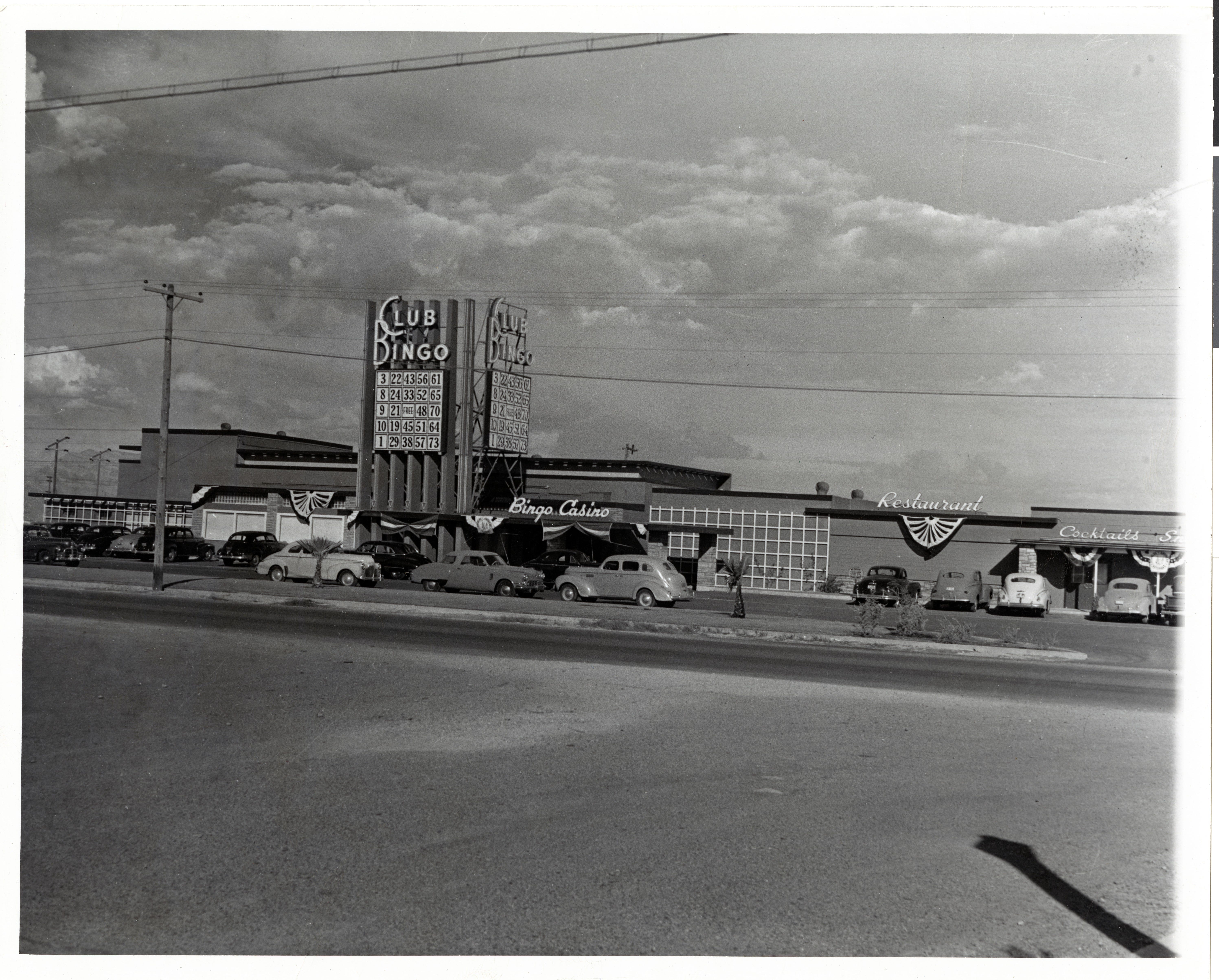
Club Bingo opened on The Strip in 1947 before it was replaced by what is now Sahara Hotel and Casino.
The Great Depression, for all of its misery, is the reason so many states turned to legalizing some form of gambling in the 1930s, and it is probably why any of us live on this patch of desert today. In 1931, Nevada Governor Fred “Fightin’ Fred” Balzar worked a ‘Wide Open Gambling Bill’, which allowed almost anything that could be gambled on. The restrictions were few: sheriffs controlled local licenses, minors were banned, and there was limited, if any, state oversight.
Most of the first legal gambling spots were the bingo halls and cardrooms that already existed. State regulation would come later, after World War II, when everyone got serious about taxation. Commissions and boards would form in the 1950s, and the rest is bureaucratic history.
Then, now, forever
Bingo has been around in some form or another since the 1500s. Italians played a game called Il Gioco del Lotto d’Italia as early as 1530. Lotto was played with a pre-printed grid, and players would gather in a hall to try and match them up in a line as numbers were pulled at random.
The game was big enough that massive lottery scandals would follow in the 1600s, and a similar game would catch on in France in the 1700s. By the 1920s, bingo started to be a standardized game that you could find at fairs and carnivals in the US, with versions of the game that were toured around by their investors.
Bingo evolved into the backbone of depression-era gambling. It was cheap and could accommodate an endless number of players, which made for great fundraisers at churches and a cheap weekend activity for everyone else. This was especially true in Nevada, where gambling operators were pouring in from California to avoid the shakedowns from increased enforcement.
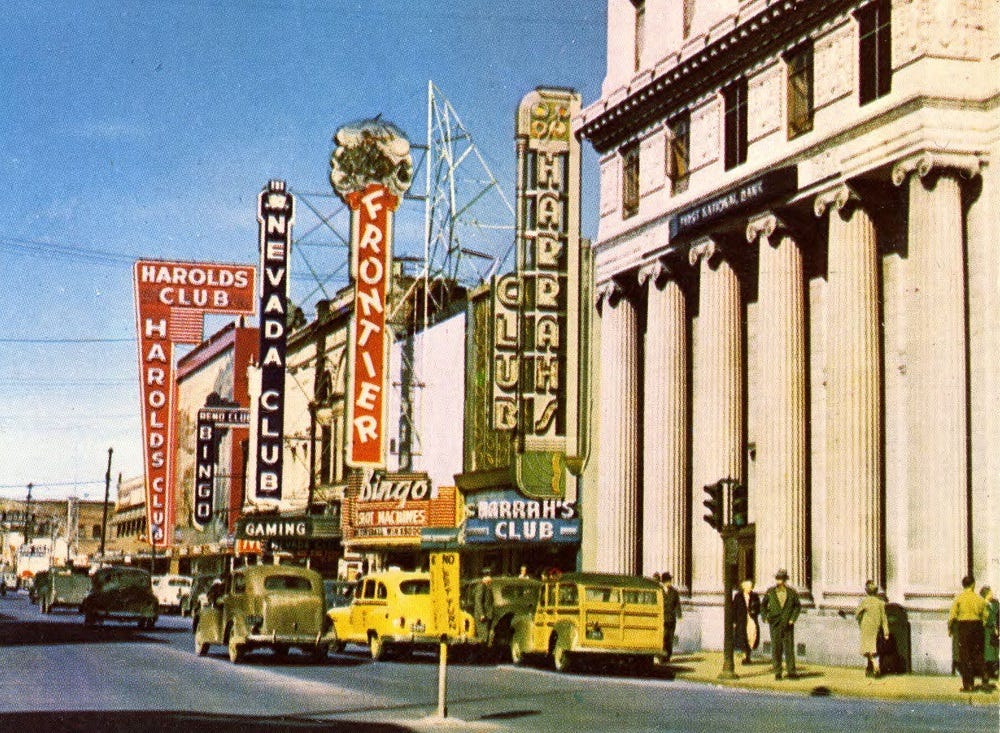
Bill Harrah’s gambling empire started with a bingo hall. (Source: UNR Library, Special Collections)
Guys like Bill Harrah built an empire that started with bingo in Reno, operating halls throughout the 1930s that eventually grew into full casinos. Las Vegas began to develop The Strip after WWII and one of its first casinos was Club Bingo, a 300-seat parlor that opened in 1947 before it was eventually replaced by Sahara in 1952. A different Club Bingo opened downtown in the 1960s, and it ran until 1983 when the Pioneer Club expanded into its space.
Later, another Las Vegas casino empire would get its start in the bingo halls, as Frank Fertitta Jr.’s Bingo Palace developed what we now know as the standard concept for a local’s casino. Bingo, cheap food, lots of giveaways, and plenty of parking helped Bingo Palace transform into Palace Station. The concept was ported to several other locations throughout the valley under the Stations Casino name.
This is all before we get to the impact that bingo has had on tribal gaming, especially in Nevada and surrounding states like California. Early bingo halls challenged state authority and enforced tribal sovereignty, and the legal battles around them shaped the future of the industry with the Indian Regulatory Gaming Act of 1988.
Will bingo work on The Strip?
Bingo on The Strip disappeared when they tore down the Riviera, but it thrives today in just about every other corner of Las Vegas. You can find a game at just about any hour at places like Red Rock, Sam’s Town, South Point, and Gold Coast, while Plaza Hotel and Casino continues to offer bingo on its third floor in Downtown Las Vegas.
Now, Circus Circus is taking a swing with a new(ish) bingo hall on the Promenade Level. The vintage style game is ink-and-paper only, and it runs from Thursday through Sunday at 3pm. It’s part of a Circus Circus rebrand that started earlier this year, where the casino leans into its “vintage” look, feel, and smell. The effort also includes an increase in coin-operated games, which can be found near the bingo hall.
Las Vegas Valley casinos with bingo
Circus Circus
Plaza Hotel & Casino
Palace Station
Gold Coast
Red Rock
Boulder Station
Green Valley Ranch
Santa Fe Station
Sunset Station
South Point
Sam’s Town
Suncoast
Aliante (North Las Vegas)
Cannery Casino (North Las Vegas)
Arizona Charlies Boulder
Arizona Charlies Decatur
Jerry’s Nugget (North Las Vegas)
Rampart Casino
There’s no doubt that bingo is a big deal throughout Las Vegas, and will likely remain so long after we are all gone. But can bingo thrive on The Strip?
It’s a tough sell. Casinos don’t really want to lock up tourists at a fixed-cost for a fixed period of time. They have relented on this idea when it comes to shows, but bingo isn’t going to bring in the same amount of money as other games.
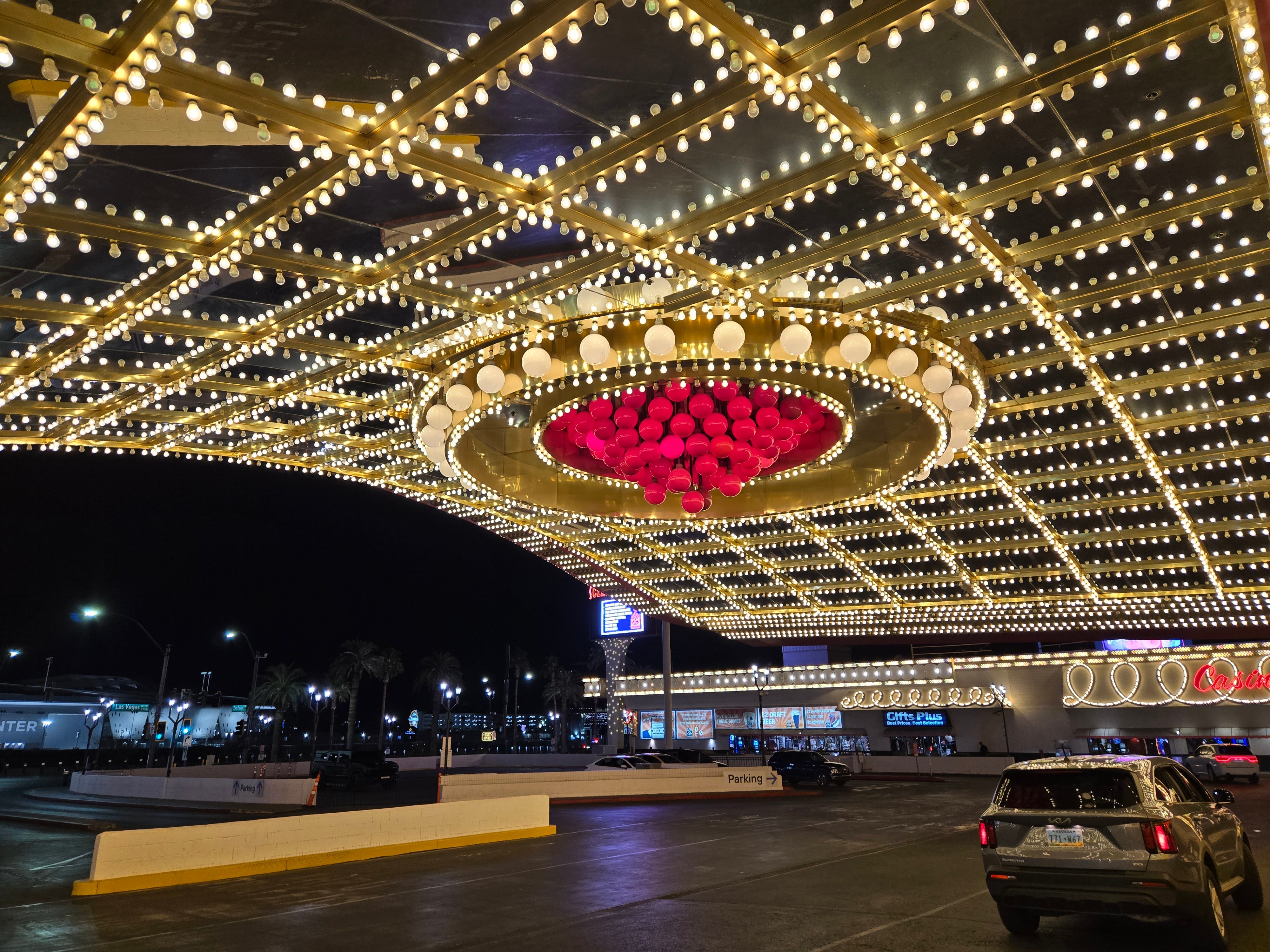
A vintage Circus Circus welcomes back the bingo crowds.
Its fixed cost and predictable nature can be great for a locals casino, where consistency is profit. You can shear a sheep as many times as you want at $60 per session, but Strip casinos need to draw dollars in a different way: faster — and more of them. It’s much better for out-of-town guests to fire $100 into a slot machine in the five minutes before dinner than it is to drag out $60 in a bingo hall over 60 minutes.
It’s a good fit for value casinos, like Circus Circus, but there’s no reason to expect a Caesars Bingo Palace. Either way, bingo deserves our respect, both as a game that is fun to play and as a cornerstone of gambling in Nevada. It made gambling popular, affordable, and legitimate, and it planted the seeds for two very large gambling empires in Harrah’s and Station.
The future of bingo remains bright. If the economy goes to shambles, we will still be able to afford it. Locals can find a game at any hour, and big jackpot events continue to draw a large crowd. You can probably find a bingo game anywhere in America that has Catholic schools. It has been played for hundreds of years and it will be played for hundreds more — but you probably won’t play it at Aria.
Lead photo: UNLV Libraries Single Item Accession Photograph Collection