

Chinatown in Las Vegas is not like the other Chinatowns.
The name might suggest a traditional ethnic neighborhood that evolved organically into a cultural center over several generations, but Las Vegas doesn’t have the luxury of 100s of years of urban history.
Our Chinatown is a master-planned commercial community, optimized to support over 200 restaurants and countless other small businesses. It was created from scratch on a seven-acre lot west of the Las Vegas Strip on Spring Mountain Road, mostly because a growing number of Chinese tourists couldn’t find a decent bite to eat.
Before Vegas
Chinese settlers were among the first to hit the dusty railroad town after it was named in 1905, and they arrived to Nevada before that in the mid 1800s, mostly to support mining and railroad construction. There were even a few Chinatowns in the northern part of the state, with towns like Dayton and Virginia City housing large groups of immigrants.
Throughout early Vegas history, Chinese immigrants ran the laundries and the restaurants, but they were barred from working in the construction crews on the Hoover Dam. Prejudice was common, and severe, a holdover from the Chinese Exclusion Act of 1882.
The pan-Asian community, though dispersed, continued to grow as Las Vegas transformed itself into the Entertainment Capital of the World. At the same time, the Chinese population in Los Angeles numbered into the hundreds of thousands, and everyone loved Las Vegas. By the 1980s, many families were making the trip at least once a year, especially around Christmas.
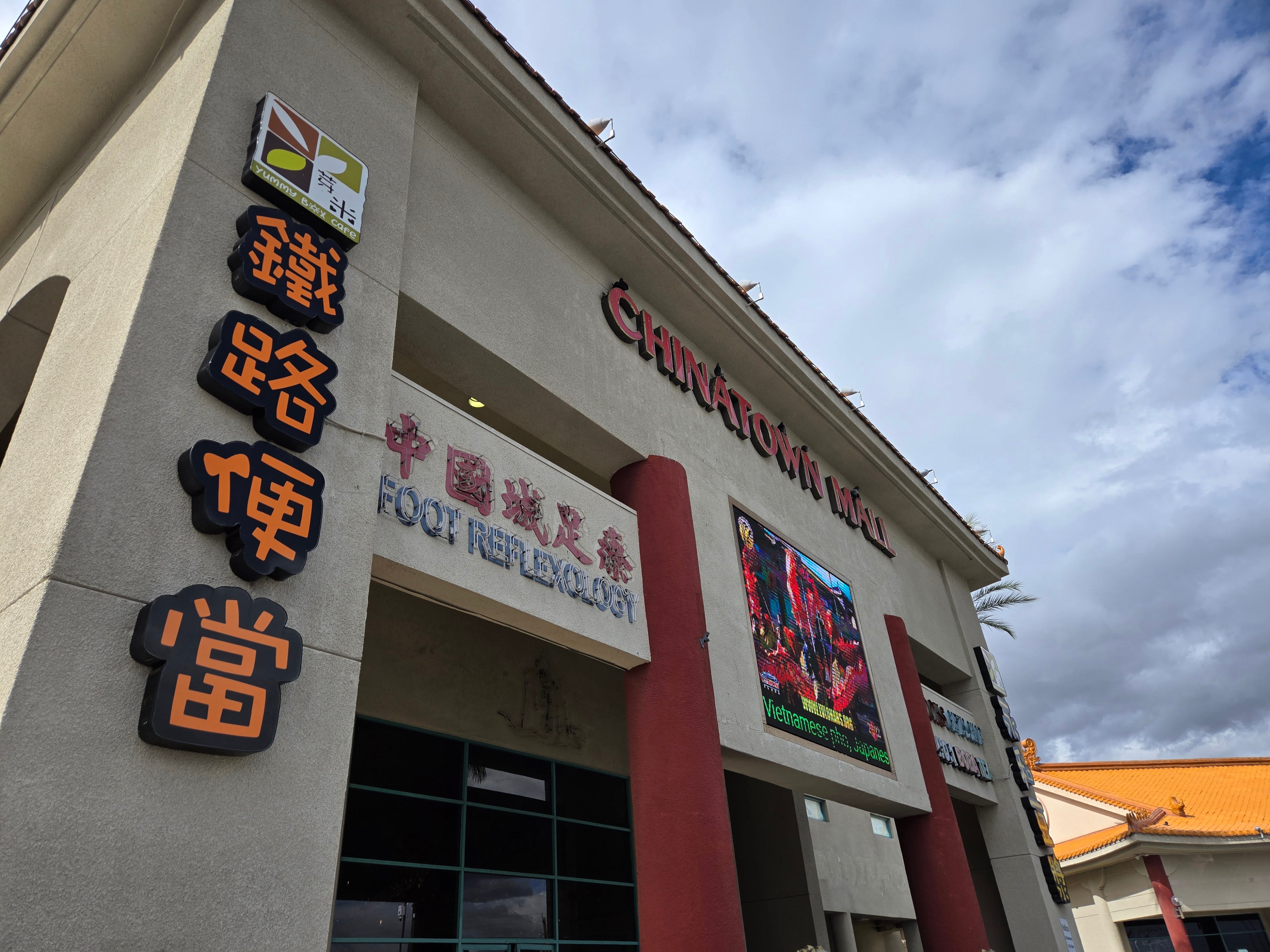
Chinatown Plaza was the first in a master-planned commercial development.
The idea
Henry Hwang, an immigrant businessman from Taiwan, was listening to the feedback from friends who were enamored with Las Vegas.
“‘We just want to have one meal of good Chinese, authentic Chinese restaurant.’ Nobody could really point out where. Inside the casino they’re very expensive and they were not that authentic, really, back then.”
“All had the same problem,” Henry said. “No real Chinese restaurants.”
Henry sat with his daughter Sharon Hwang in 2017 for an interview as part of UNLV’s Reflections: The Las Vegas Asian American & Pacific Islander Oral History Project. The three-year effort collected 130 interviews, all of which were edited and cataloged digitally. In a long chat, Henry and Sharon describe their big gamble on Las Vegas, where Henry would go on to create what we now know as Chinatown.
The lack of restaurants was a big problem, Henry’s daughter Sharon said. “When you’re here three to four days, you kind of get tired of the same thing, and you want something authentic maybe for like a lunch or a dinner and you can’t find any.”
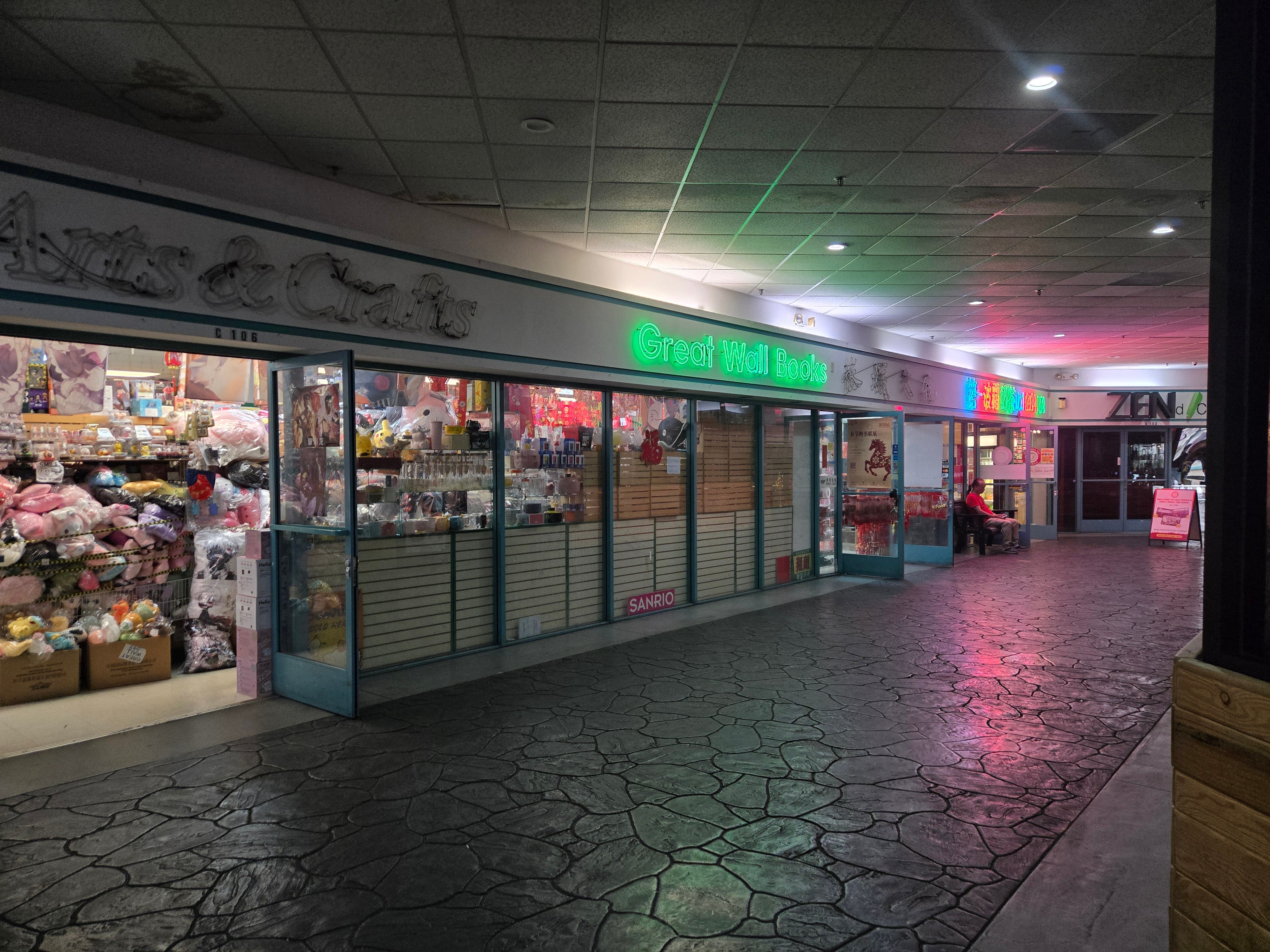
The bookstore is among several long-term cultural preservation efforts at Chinatown Plaza.
Henry saw opportunity for a cultural center in Las Vegas with great restaurants and local supermarkets to serve what was a growing population of pan-Asian immigrants, so he joined with two business partners, James and K.C. Chen, to grab around seven acres along Spring Mountain Road between Arville and Wynn. Chinatown Plaza was built on that lot, featuring around 90,000 square feet of business space.
In a time before Las Vegas stretched much further west than Rainbow Road, the location was everything.
“They had some criteria basically,” Sharon said about her dad and his business partners. “They wanted it close to the Strip if possible — obviously tourists, convenience — and then also big enough to accommodate a center that they were envisioning. So they kind of just drove everywhere and found this is actually the best because we're minutes away [from the Strip], and then large enough to host what they were going to do. Because everywhere else, even if you go on Arville [Street], Decatur [Boulevard], they're kind of either too small or ended up going too west too far.”
The location near the Strip as also perfect for locals. It was a quiet area. The only real concern being a nearby railroad that threatened to stop motorists for extended periods of time. An overpass would solve that problem a few years later, and Spring Mountain was open for business.
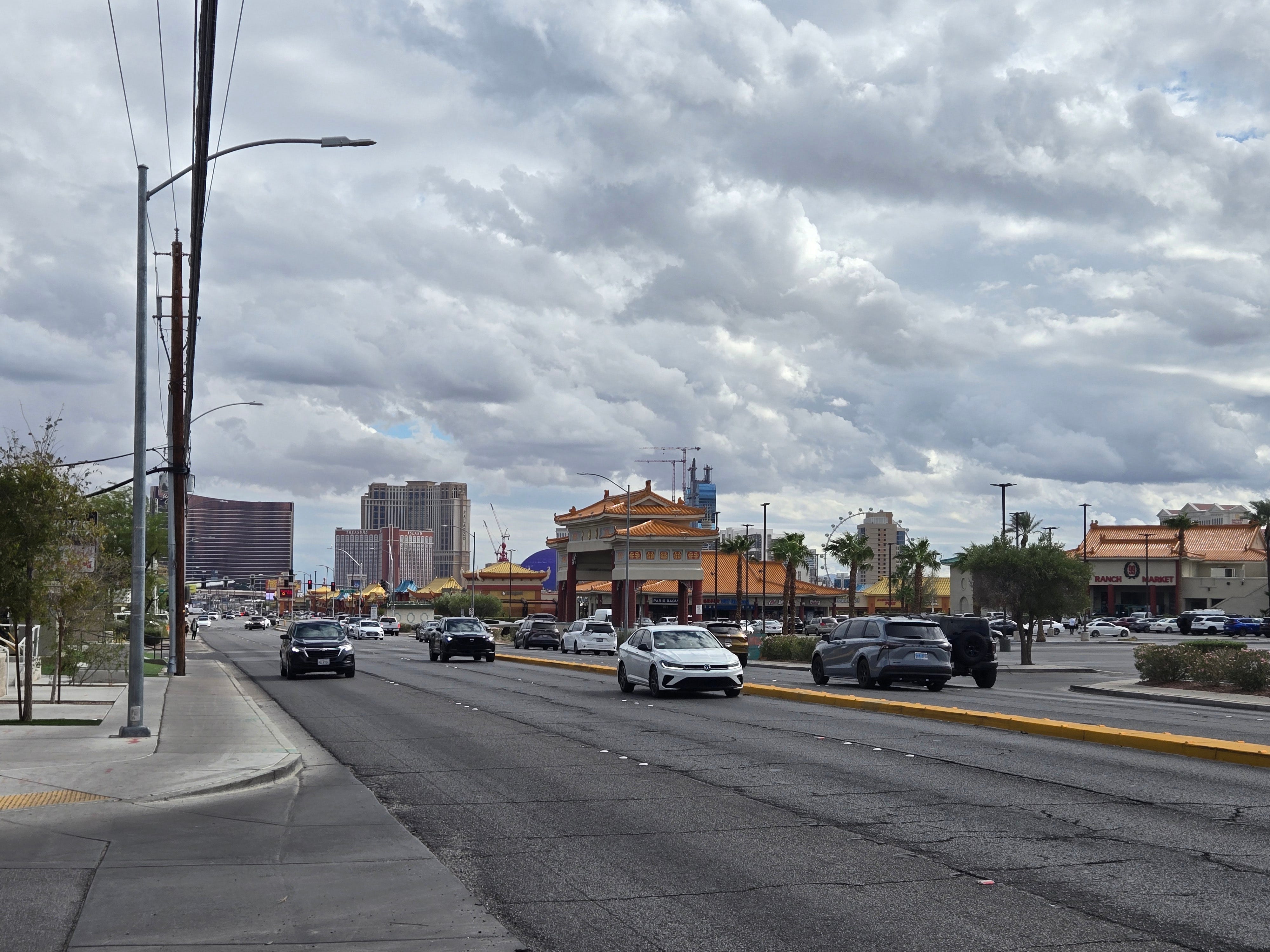
Spring Mountain Road is now a high-traffic corridor that leads to and from the Strip.
Growing pains
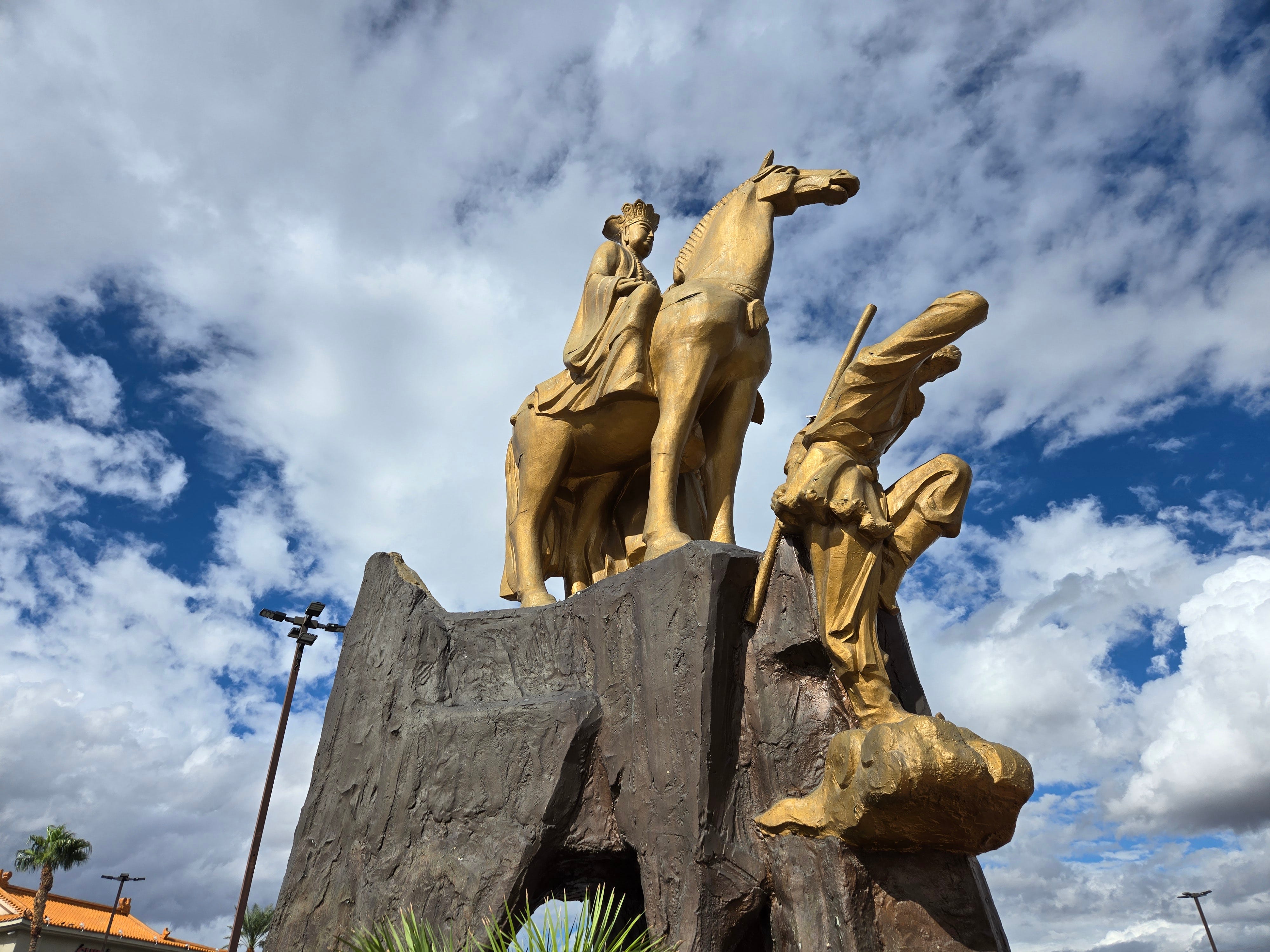
The Chinatown Plaza complex shows off a few Tang Dynasty-styled design choices, like a large ornate entrance gate and ceramic tiled roofs. It opened for good in 1995 with the still popular 99 Ranch Market as its main tenant. By 1996, Clark County had recognized it as the Asian Pacific American Cultural Center. By 1999, Nevada had officially named the three miles along Spring Mountain Road from the Strip to Rainbow Boulevard as ‘Chinatown.’
The plaza was a big success as the population grew in the Las Vegas Valley in the early 2000s and other businesses filled in along the three-mile corridor to create a melting pot of culture from China, Vietnam, Japan, Thailand, Korea, The Philippines, and more. Now, Chinatown is home to 100s of immigrant business, large and small, and it brings in millions of visitors every year. Locals seek out the top-shelf chefs and world class dining without the hassle of the Strip, and the word is out among a growing number of tourists.
The growth has led to a lot of challenges, like traffic, parking, and pedestrian safety issues. The buildings are getting older, and now rents are going up. The quality of the infrastructure now needs to keep pace with the rapidly rising value of the real estate.
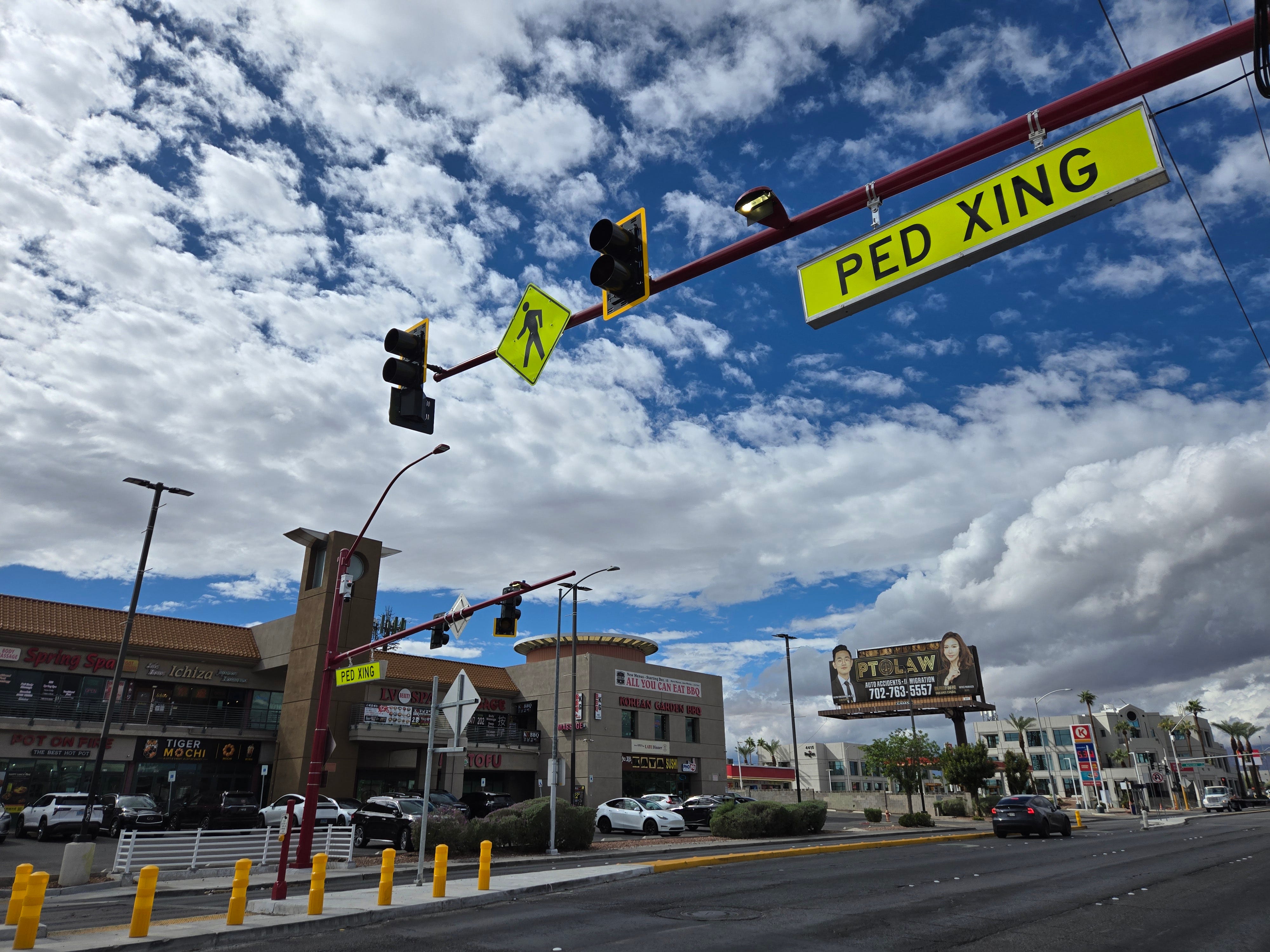
Clark County installed what it is calling the first “smart crosswalk” with automatic cameras and flashing beacons.
Smart crosswalks
Clark County now calls the area a redevelopment zone, and they’ve formally adopted a plan dubbed “Inspiring Spring Mountain” — with the primary goal of improving walkability and transit options. The sidewalks will be wider with more shade, and the area will lean into technology for smarter, safer crosswalks.
One main problem, for both pedestrians and cars, was the jaywalking across Spring Mountain Road between Chinatown Plaza and the newer Shanghai Plaza. It can easily be the busiest spot in Chinatown at certain times of the weekend, and the most common place to get hit by a car.
A new grade-level pedestrian crosswalk features flashing beacons, high-viz signs, and cameras that can read the license plate of anyone who blows through it. They’re calling it a “smart crosswalk” and it’s the first of its kind around Las Vegas.
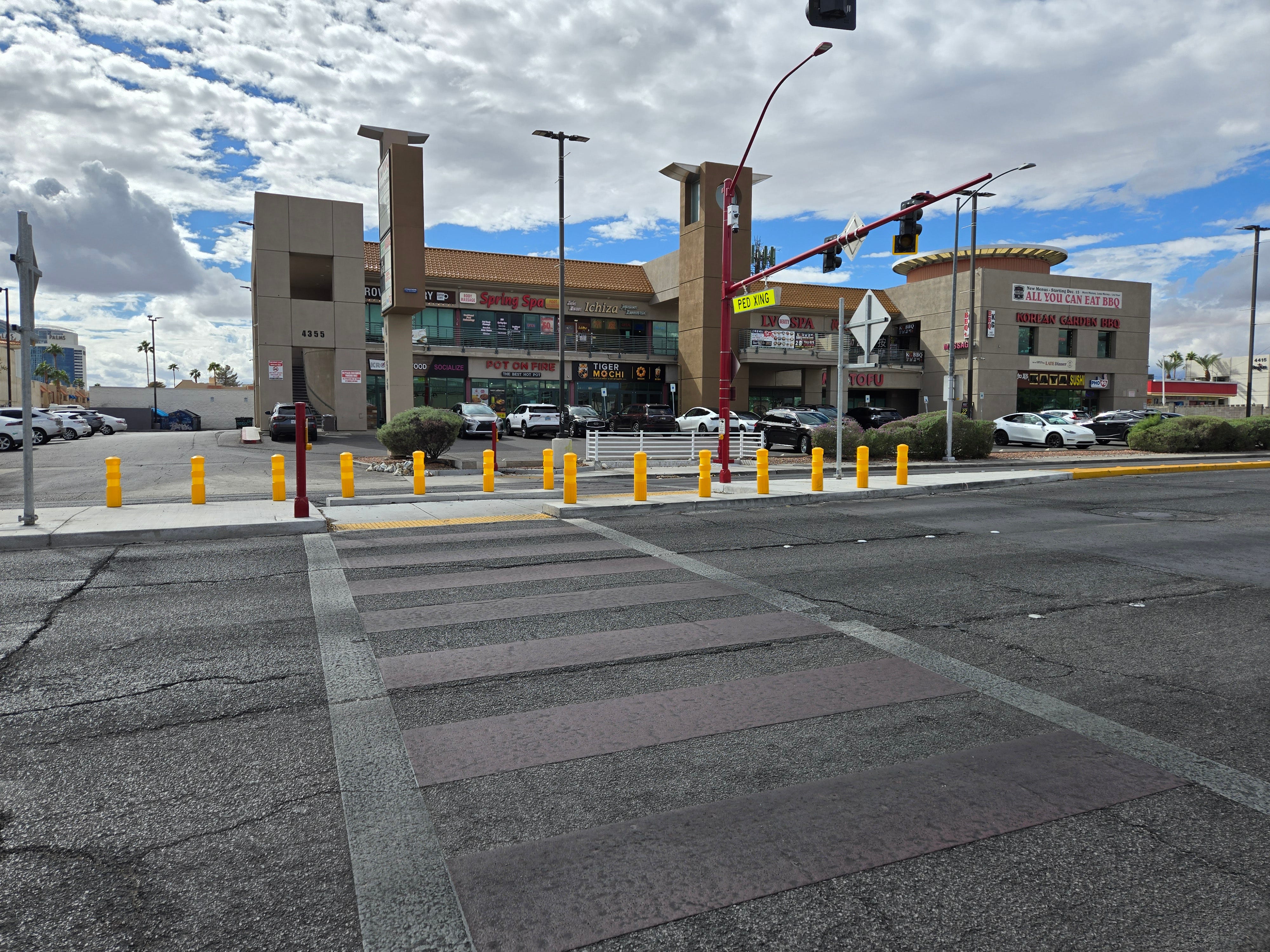
The grade-level crosswalk solves a major jaywalking problem in Chinatown’s busiest stretch.
A second smart crosswalk is planned across Jones Boulevard between the Mountain View Plaza and the Spring Mountain Center, and the roads will be resurfaced with more lighting and trees throughout the multi-year plan. The sidewalks will also get wider, mostly likely by reducing the westbound lanes.
The steps are essential to support Chinatown’s next step: housing. A $143 million, 380-unit apartment complex is under construction just south of Spring Mountain on Valley View.
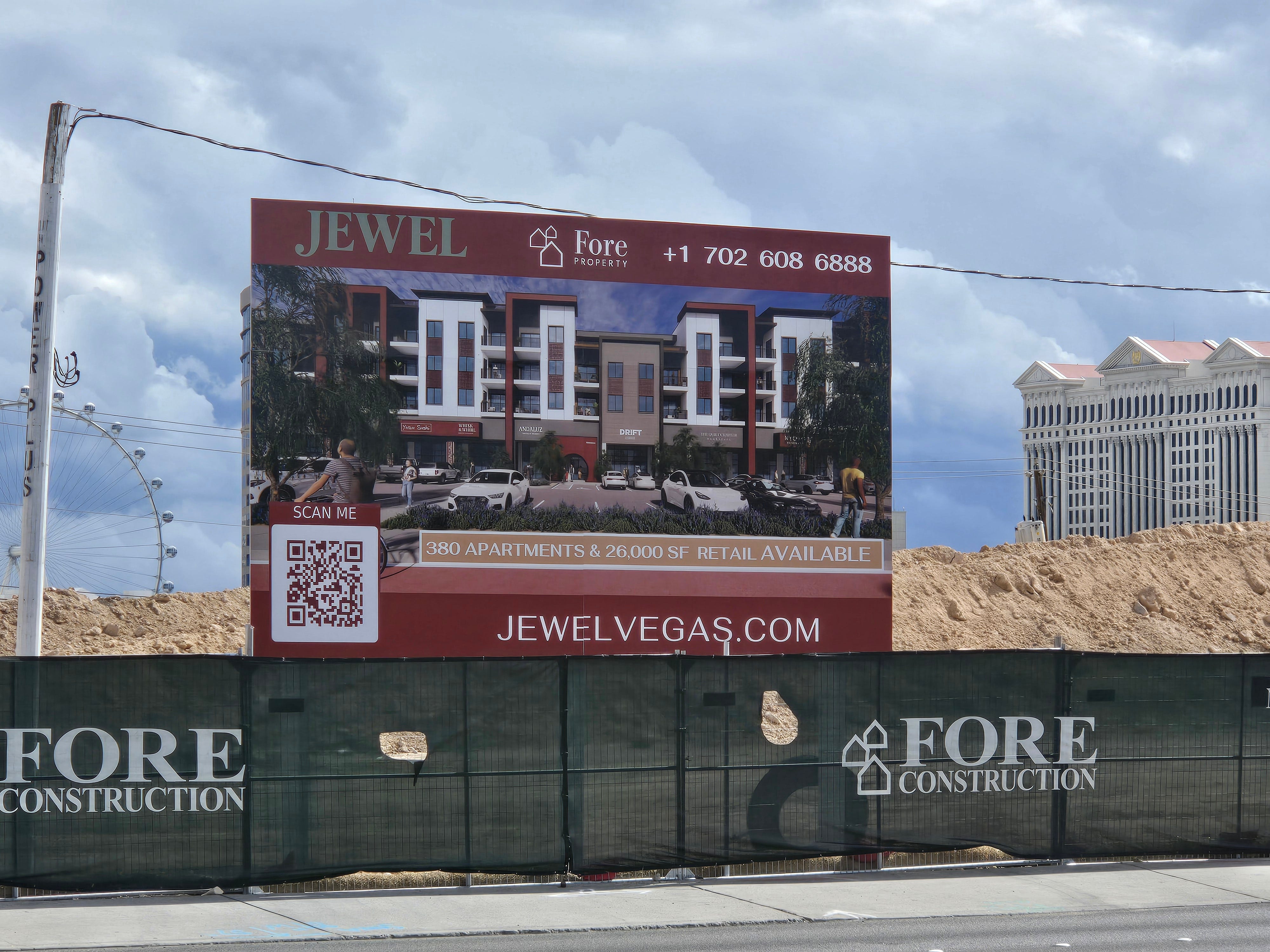
‘Jewel’ planned for Valley View
Housing was not much of a consideration when Chinatown was originally conceived. It’s a commercial shopping district, with plenty of parking to support the residential neighborhoods throughout the rest of Las Vegas. The redevelopment efforts, however, are focused on growing the housing options in the era.
The new development, called Jewel, broke ground last month and it will transform what was previously a blighted plot along Valley View. Its 380 apartments will open in 2029 with around 25,000 square feet of ground-level retail space. Another development, Jade Promenade, is approved to break ground later this year for a retail plaza at Spring Mountain and Wynn. Their second phase plans 150 apartments.
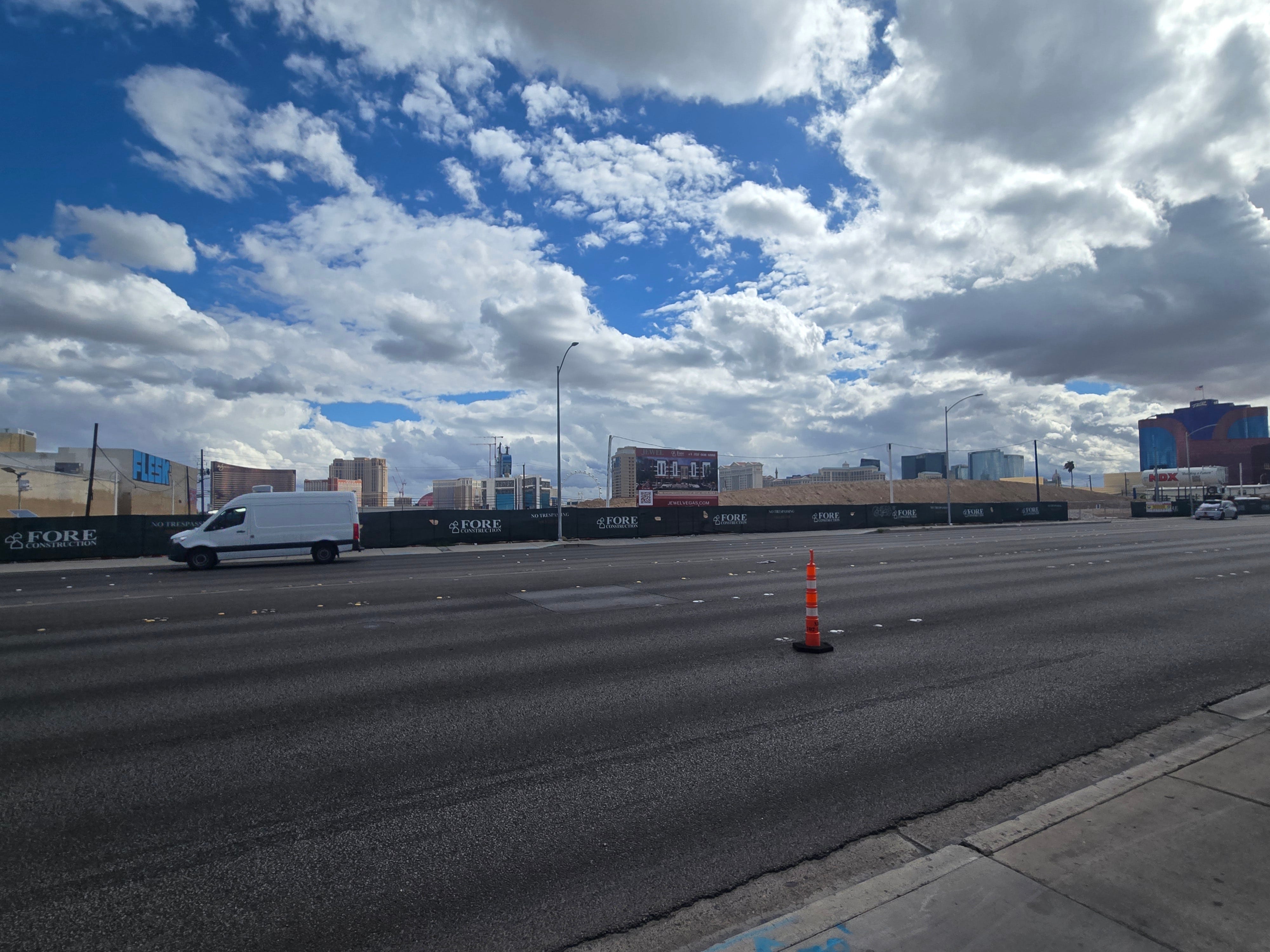
The Jewel apartment complex is set to open in 2029.
The goals of the redevelopment will shift the area from what was purely a restaurant destination to one where people will live and work, which will provide even more customer base for evenings and weekends. The goals are simple: more housing, better walkability, cultural preservation, and support for small businesses. The steps to meet those goals are even simpler: safer crosswalks, better signage, and improved infrastructure. It’s a lesson to keep in mind as other areas of Las Vegas develop too quickly to maintain order and logic.