

It’s harder than you think to dig a hole in Las Vegas.
Layers of thick caliche cover the valley, settled below ground like natural cement. The evaporating rain left behind calcium carbonate deposits over thousands of years in the Mojave Desert, and now it has fused together the gravel, sand, and clay.
The caliche spreads throughout Las Vegas but its impact varies. In some spots it is thin, only a few inches, but it can be a lot thicker than that.
Your shovel isn’t getting through it. Regular-grade digger equipment won’t either. You’ll probably need a big rock hammer, and some hydraulics to power it.
A high water table adds to the issues in Vegas, with groundwater sitting close enough to the surface to flood your underground project without much effort.
All of this is say that Las Vegas probably isn’t fit for a subway system.
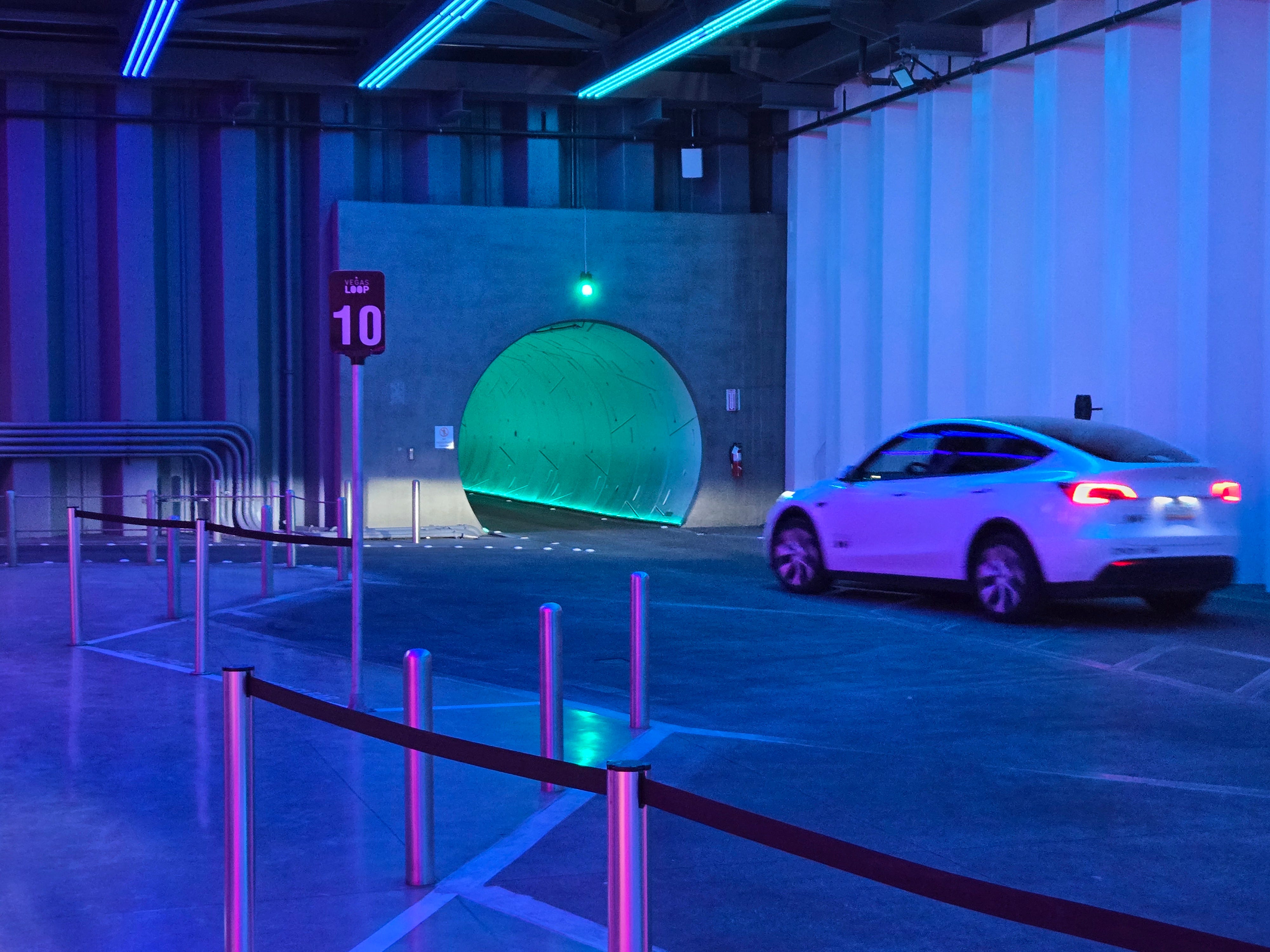
But The Boring Company offered to built an underground transportation system at the Las Vegas Convention Center, and they had the equipment to back it up. So we went for it.
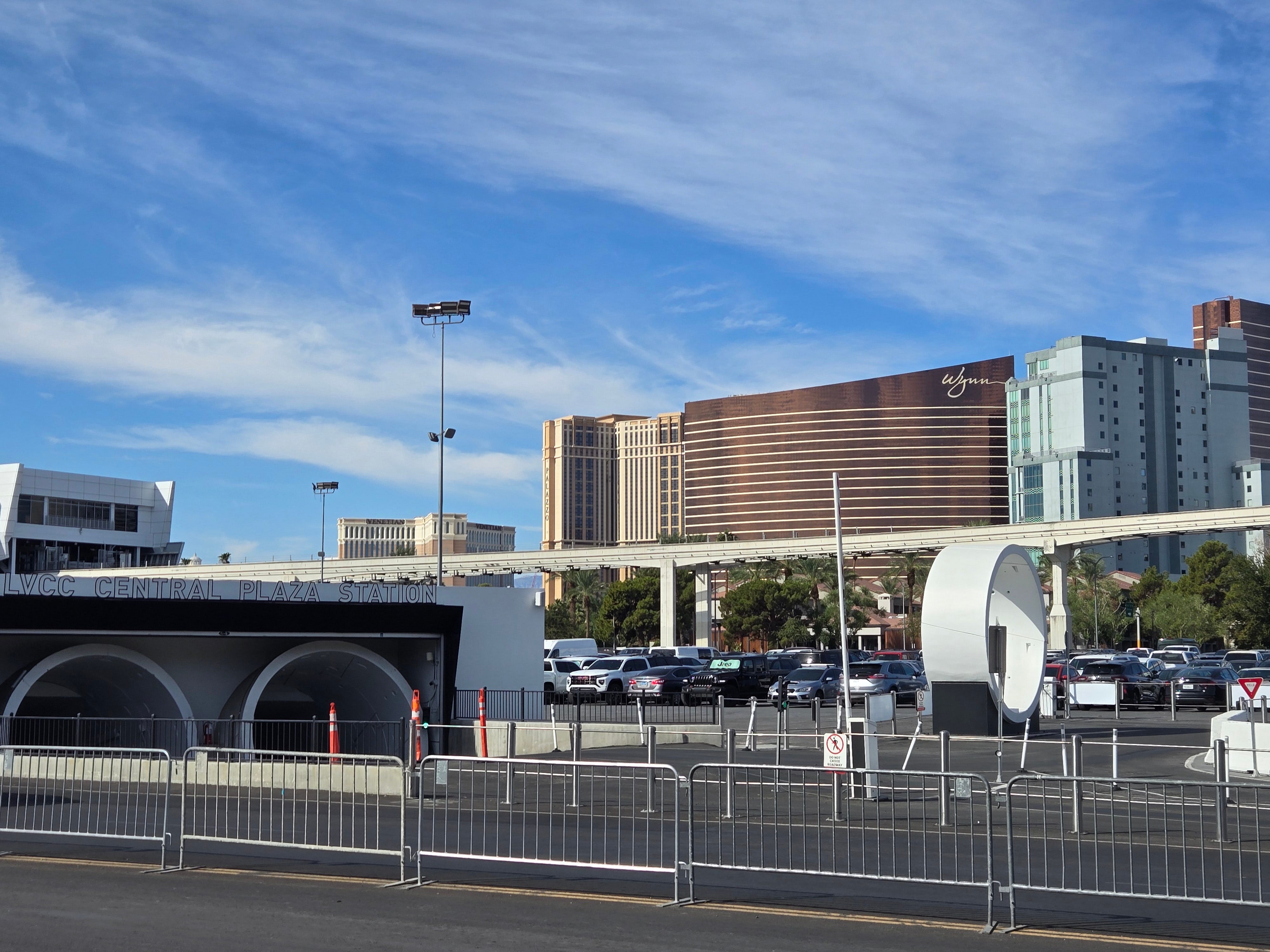
The Vegas Loop’s Central Plaza Station features a sample section of the tunnel.
Boring Las Vegas
The Boring Company was started under the umbrella of SpaceX in 2017, and the tunnel digging outfit spun off into its own thing in 2018. Elon Musk, its founder, remains its owner and general figurehead.
They use custom boring machines with high-strength alloy steels and tungsten teeth, and they’re highly automated for the task with remote controls that are used above ground. It’s a major innovation for underground drilling and digging, with no humans required in the tunnel.
When the project was announced in March of 2019, the $50 million contract was the first for TBC. It was a pre-COVID era when Las Vegas was trying to position itself as a great place to start a tech company, and local officials praised the disruption of technology at the time.
The $50M bid called for the design of what they coined a “people mover” for the Las Vegas Convention Center. It was to be a novelty for convention crowds, and the next phase for The Boring Company after a successful test tunnel in California. They started drilling in November of 2019 and the 1.7 miles of tunnel finished below the LVCC in May of 2021, in time for an opening later that October.
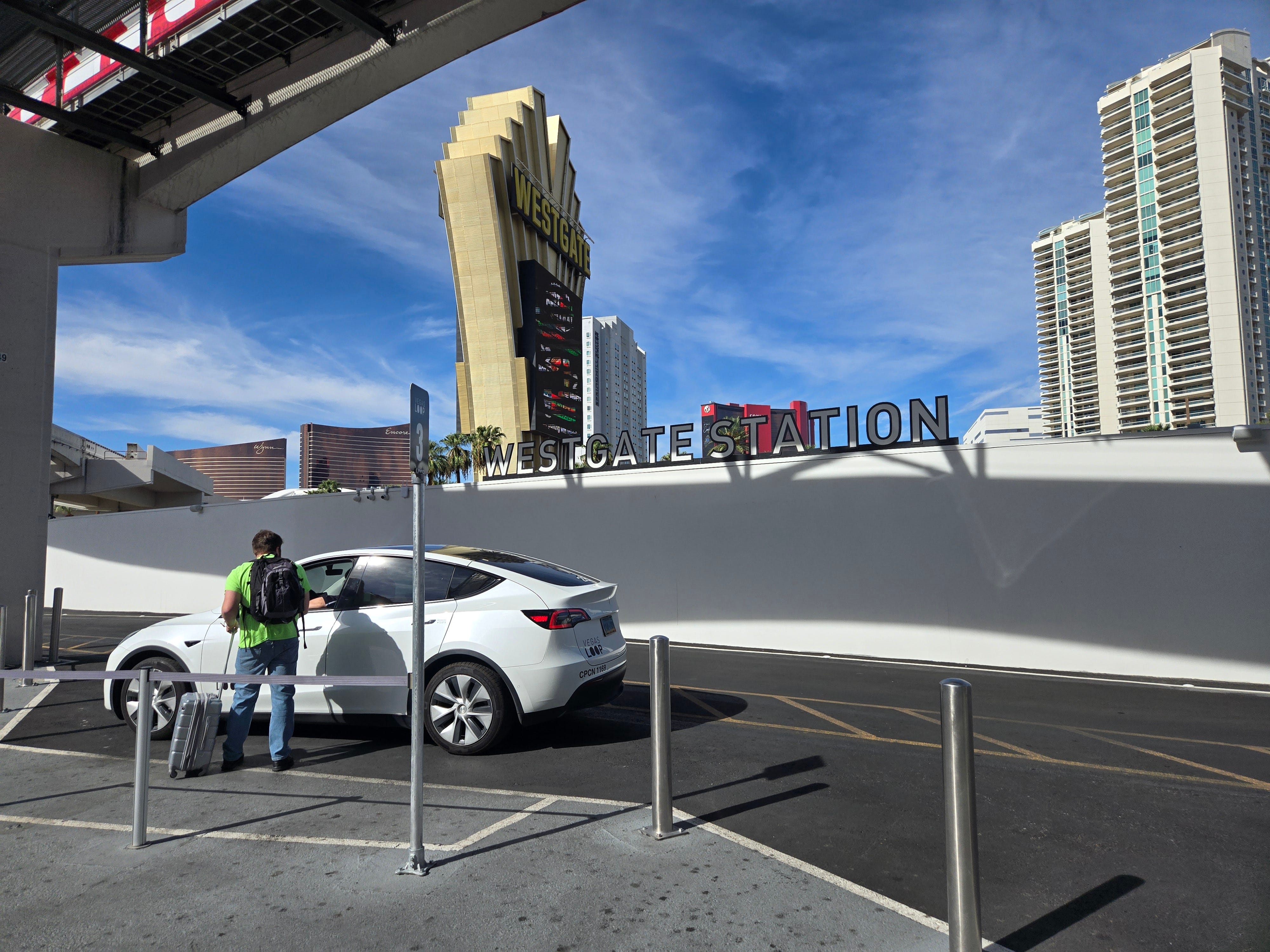
The Westgate Loop station loads above ground before entering the tunnel system.
Almost immediately, Clark County Commissioners entered into a 50-year agreement with TBC, and the company received permission in 2023 to build a 65-mile tunnel network with 69 stations. The plan lays out a tunnel system that stops at casinos, Allegiant Stadium, the airport, and downtown Las Vegas with parts in between.
TBC claimed an eventual capacity of over 90,000 passengers every hour, or about half of New York city’s hourly passenger load.
The original $50M deal was funded by the Las Vegas Convention and Visitors Authority with hotel taxes, but the remaining network of tunnels will be paid for by TBC, and casinos will pick up the tab for the stations. Clark County and the City of Las Vegas has cleared the rights-of-way, and the LVCVA will take care of ongoing maintenance.
It’s hardly a major spend of tax dollars, especially compared to building any other type of transportation system. But is it a real transportation system? Or are we being taken for a ride with a gimmick that distracts Las Vegas from building real transit?
We already have one gimmick — the Las Vegas Monorail — and it’s mostly useless. Promises to connect the Monorail to the airport, or anything else, remain unfulfilled.
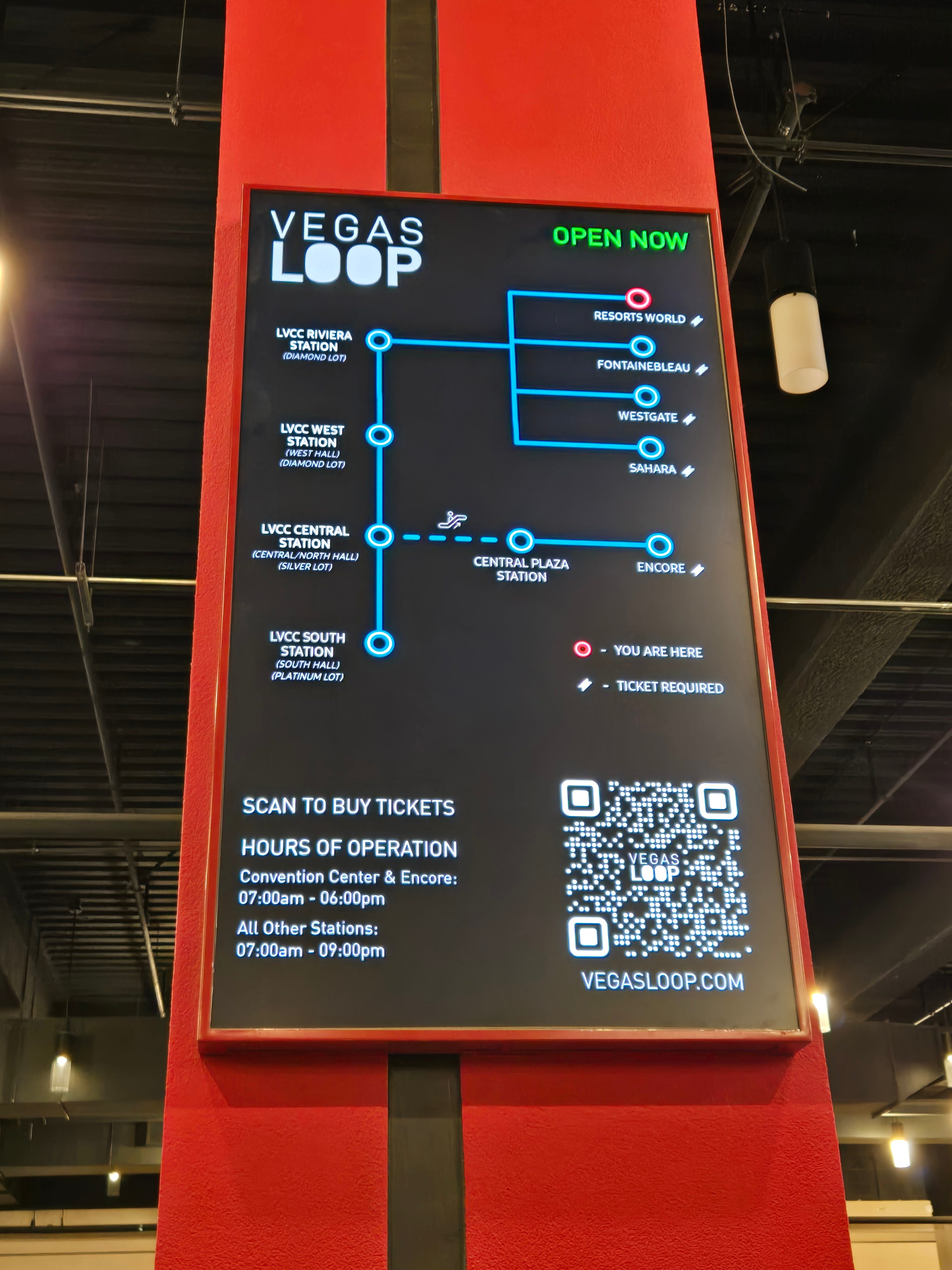
You can reach any station without stops
Private money, public problems
Earlier this year, TBC received permit approval for a tunnel from The Strat to LVCC, and a connection to the Arts District and downtown Las Vegas. Airport connections are right around the corner, too, with an above-ground version available until the tunnels are complete.
But the costs of the system are piling up. Safety and environmental issues have been a serious concern, and the regulation is limited without public and federal funding. Meanwhile, capacity promises are not true, and there’s a gap between what Musk and TBC have promised and what they have delivered.
The capacity issues are obvious. The tunnels use Tesla cars, and they hold 4 or 5 people at most. The system is likely moving thousands of passengers per day, not per hour, as promised. It can not, and will not, ever move 90,000 people per hour. It’s possible that new, high-capacity vehicles are created just for tunnel use, but that’s just a bus, and it’s still well under the ridership that a train can offer.
Ben Leffel, an assistant professor of public policy at UNLV, called it “The biggest, most absurd transit scam” he had ever seen in a meeting before the Nevada Regional Rail Transit Advisory Working Group, before he went further and coined the project a “neoliberal nightmare.”
Leffel’s main point of contention is that the project privatizes planning, which means that developers and real estate owners make all of the decisions, far away from what might be considered the “public good.” But it’s their money, right?
Not all of it.
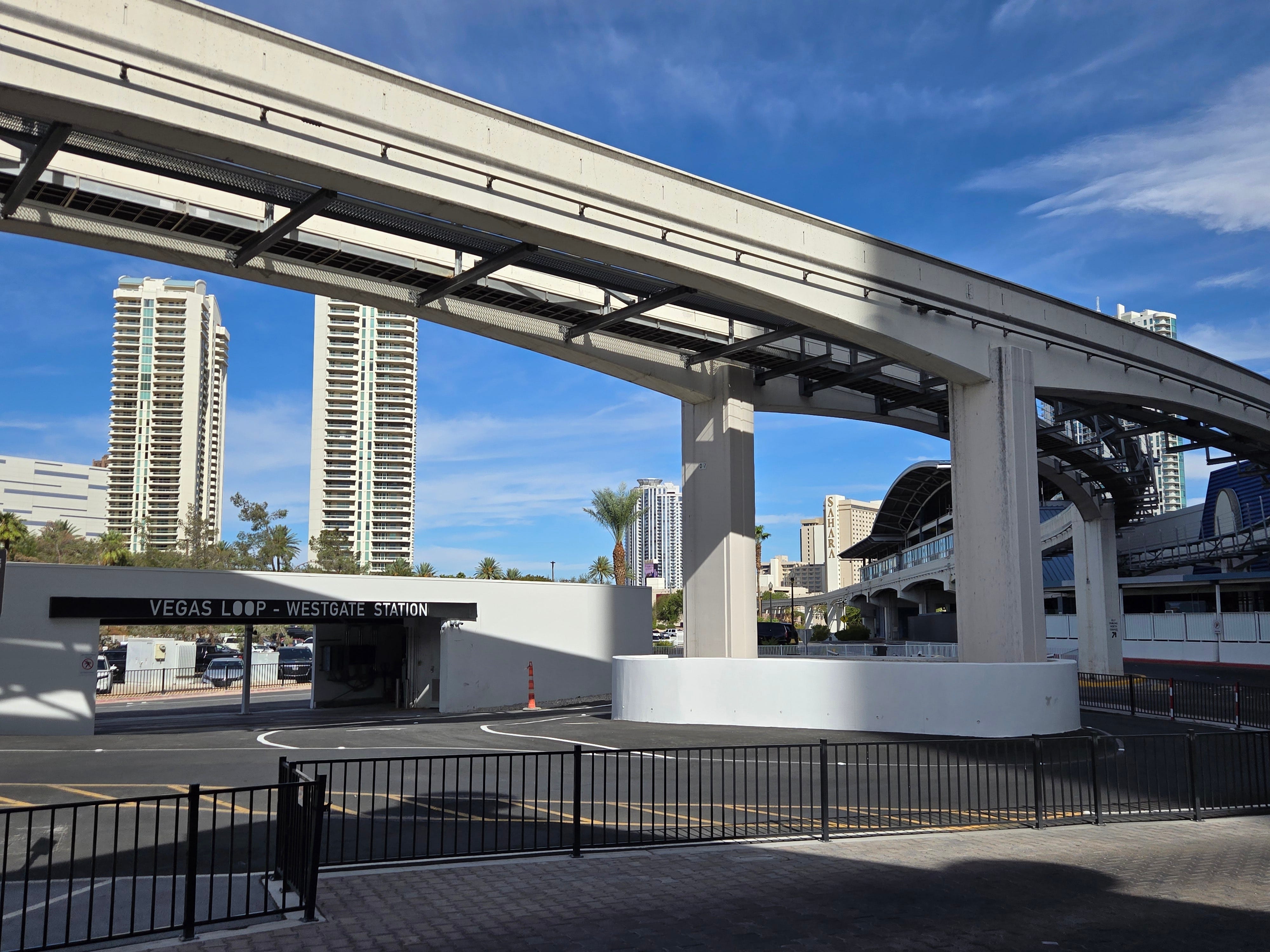
Future plans call for Monorail integration, but Westgate is the closest transfer for now.
Oversight issues
The initial money for the starter system came from hotel taxes (taxpayer money) and ongoing maintenance will come out of the same pot. Public rights-of-way have value, as well, and they’re being handed over without a lot of oversight.
That lack of oversight extends to safety issues, which are many. A ProPublica investigation in early 2025 found building, labor, and environmental issues, like digging without permits, hundreds of alleged missed inspections, chemical burns from concrete accelerants, and standing water in tunnels. Nevada found almost 800 alleged violations in two years, but reporting from City Cast’s Dayvid Figler and Anjeanette Damon found that fines that should have been in the millions were reduced into the six figures for bad drilling and dumping. Even the OSHA citations went away after high-level state officials swept them under the rug.
It’s all too-fast-too-soon for a town like Las Vegas, which is always open for business when a transportation salesman comes to town. Yes, the people mover system does move people. It’s mostly convention traffic, and for that it earns some credit. The LVCC is its own planet, and it deserves its own transportation system.
But the rest of Las Vegas needs a serious approach to its serious transportation problem, not a tech-heavy gimmick with limited impact. An autonomous high-capacity network that sits far away from traffic sounds like a dream, but that’s because it is a dream. The reality, right now, is a system that is low-capacity and not automated, with a driver required to be physically present at all times.
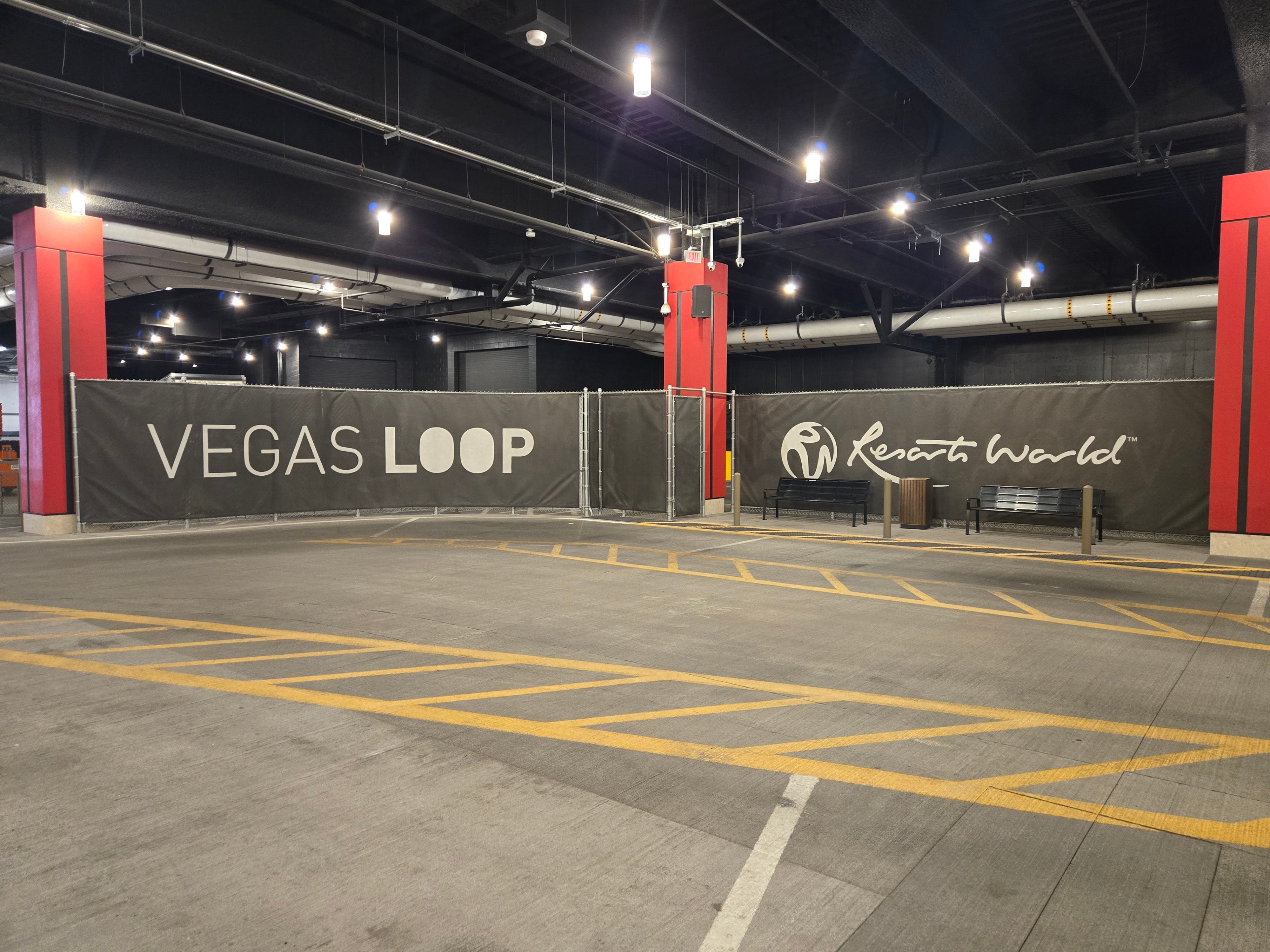
Resorts World was the first casino station on the Vegas Loop network.
The sprawling design of Las Vegas is almost completely focused around cars, and the metro area has struggled to address its public transportation problem. An inconsistent bus system is not enough to move around a city of three million people, regardless of how many highways and beltways it builds. Especially if that city wants to get serious about sports, with 81 baseball games and 41 basketball games joining a schedule that already includes the Knights and the Raiders.
By struggling to address the transportation problem, Las Vegas has also worsened its affordable housing problem, and cheaper living is pushed to the edges of the valley where people are forced to live much farther away from work. There is no other choice but to own a car, and all of the costs that come with it, just to get to work every day. This shouldn’t be the case in an American city founded in the 20th century.