

The First Friday of November slid by last week without the Arts District’s monthly street festival after a 15-year-old was killed and two others were injured in an October 2 shooting near Main and Charleston.
In its place was a smaller, quieter Art Crawl, with sidewalk sales and an open house vibe. It was a noticeable difference for an event that is used to drawing thousands of people to the 22-block Arts District on the first Friday of every month. Perhaps, for some, it was a return to the event’s simple art walking roots.
The Arts District area is at a crossroads of what has been a decades-long redevelopment project. Previous efforts expanded affordable housing and commercial opportunities for artists, and those efforts helped the area to establish itself as a small but vibrant community of second-hand shops and restaurants.
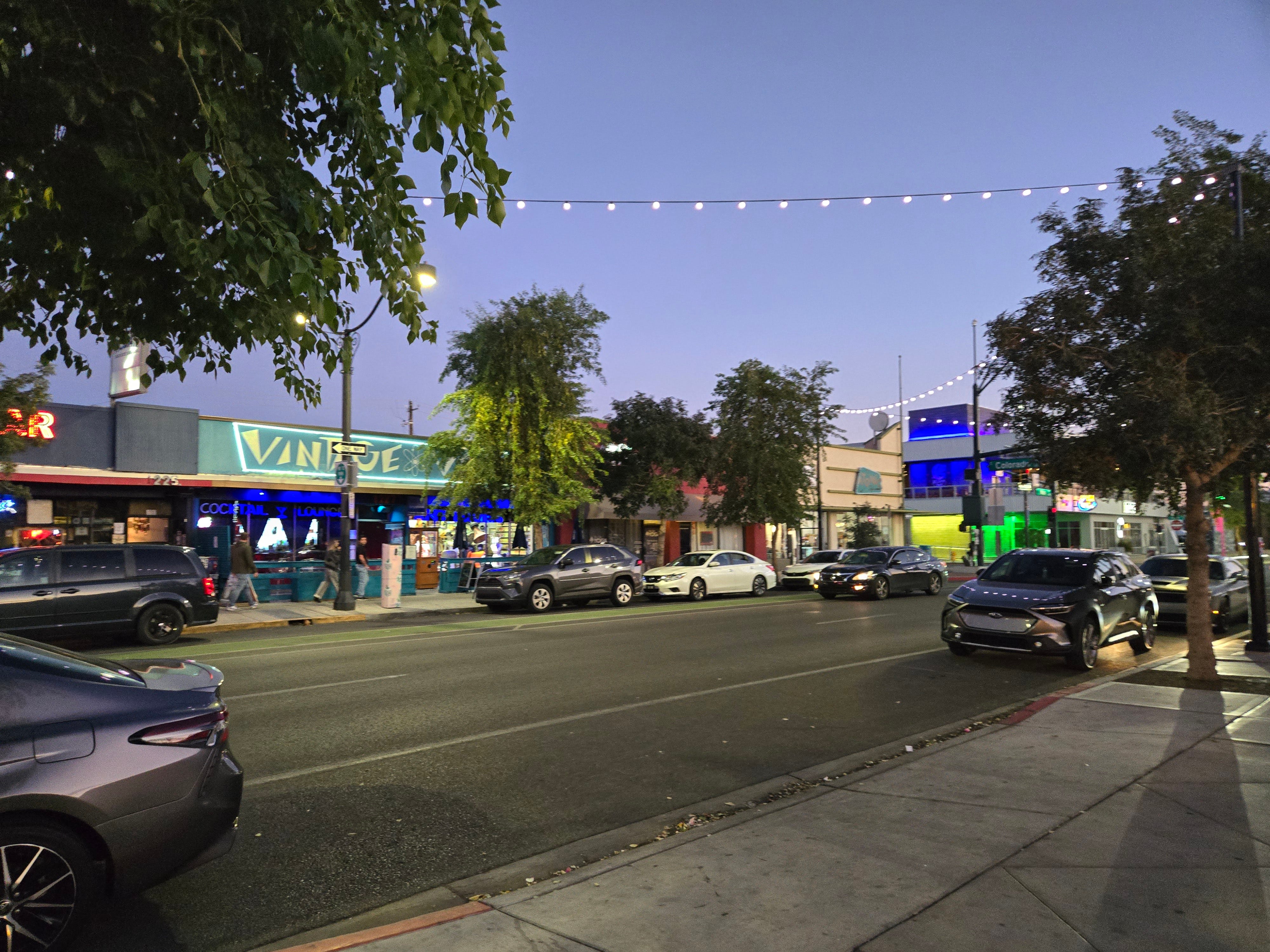
The Art Crawl drew a light crowd compared to most First Fridays.
Stakeholders are now keen to take it from creative low-rent living to luxury high rises. The urban creative vibe of the area is a big part of the draw, with younger generations moving in who value walkability and recreation over the Summerlin suburban life. The area was already dealing with major traffic concerns from a Charleston Street improvement project that just won’t end, and now the perception of violence lingers over two major apartment projects and everything the Arts District has built.
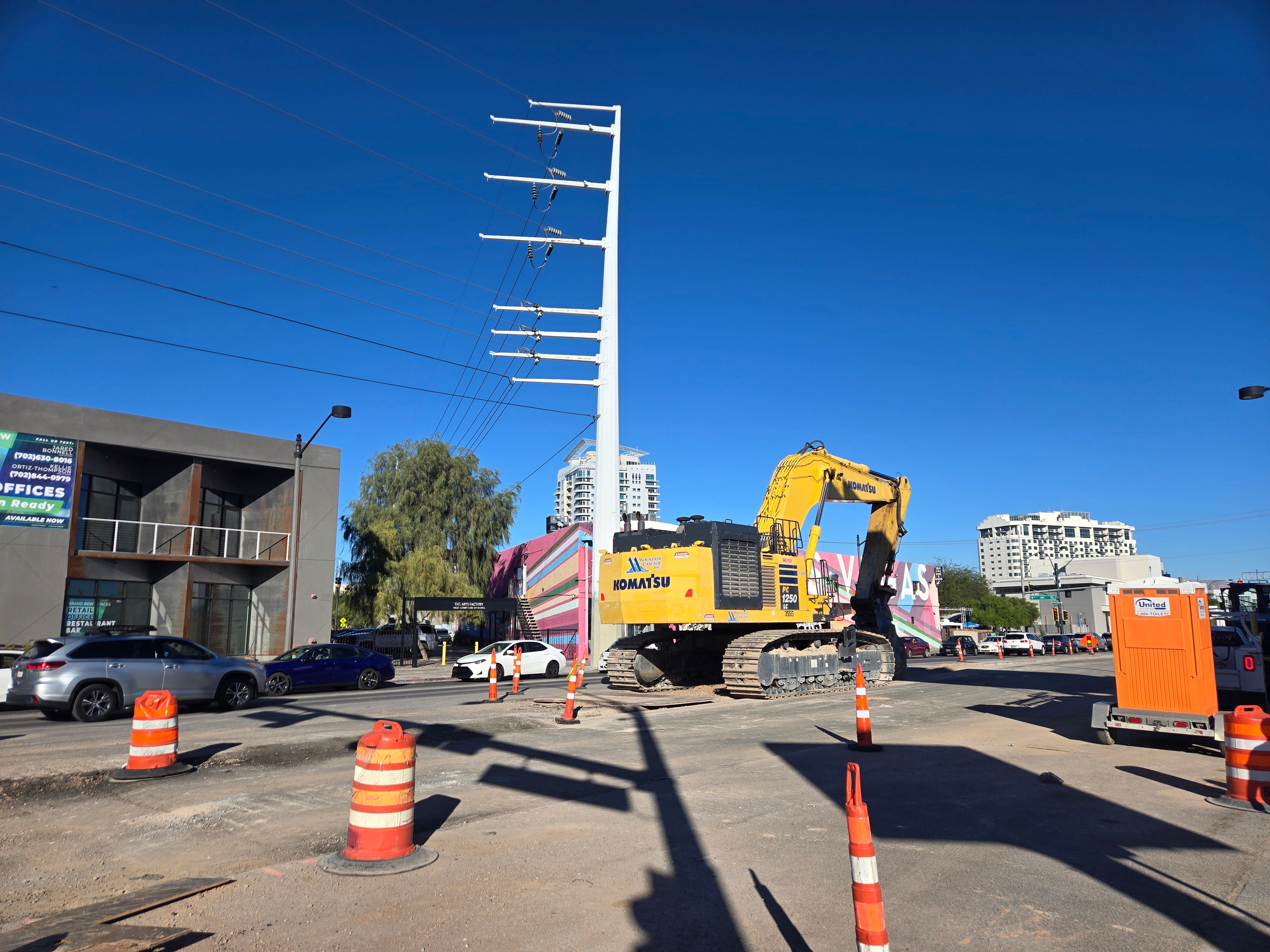
Construction on Charleston is blocking several businesses and it may never end.
‘Marauding gangs’
Las Vegas Mayor Shelley Berkley was keen to lean into that perception in her comments to the Review Journal in the days after the shooting.
“Nobody wants to eliminate (First Friday). It’s a wonderful community asset. It was never meant to be a free-for-all for marauding gangs.”
The cops say the violence was gang-related, and 17-year-old Isaac Manriquez was arrested on suspicion of murder and other related charges. Manriquez was identified by witnesses and social media video, along with the wallet he left at the scene.
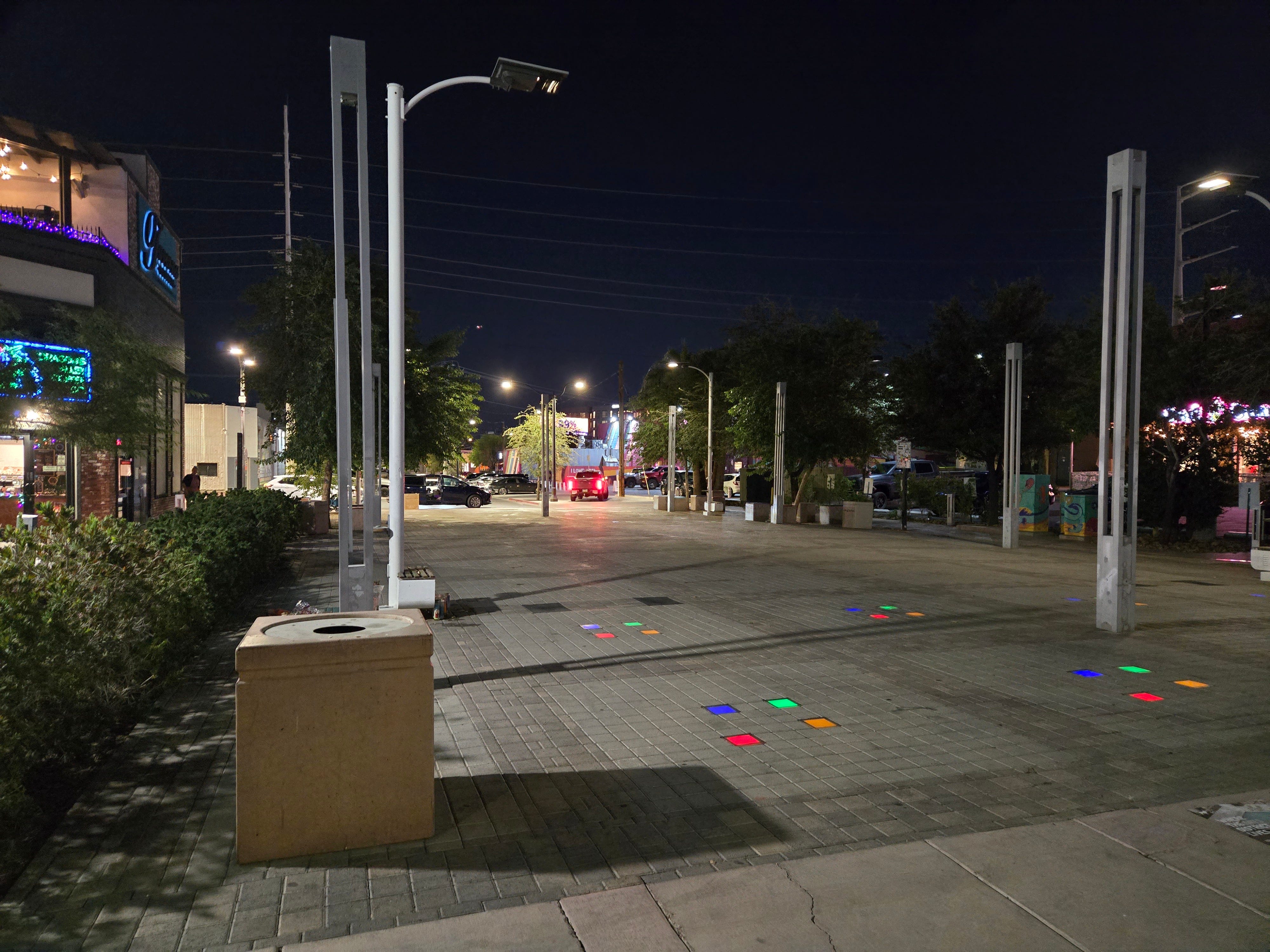
Gathering in a large group is one of the few activities available to teens at a bar-filled First Friday.
First Friday draws a big crowd of teens, mostly because they are not given much else to do around Las Vegas. It’s a rare third space for young people, and now the age group at large is taking the heat for the shooting from the Mayor:
“You cannot go to public places like the Arts District and create a condition so dangerous that three youngsters were shot and one ultimately died from their injuries. No civilized city on the planet would permit that.”
The event will remain paused until police, city officials, and other stakeholders come up with a better plan.
Industrial wasteland
The 22-block area now known as the Arts District was originally an industrial zone that served the Strip and its growing population with everything from auto repair shops to sheet-metal, furniture, home construction supplies, and salvage yards. The valley evolved and the business drifted away, leaving the area full of vacant buildings and low rent by the 1990s.
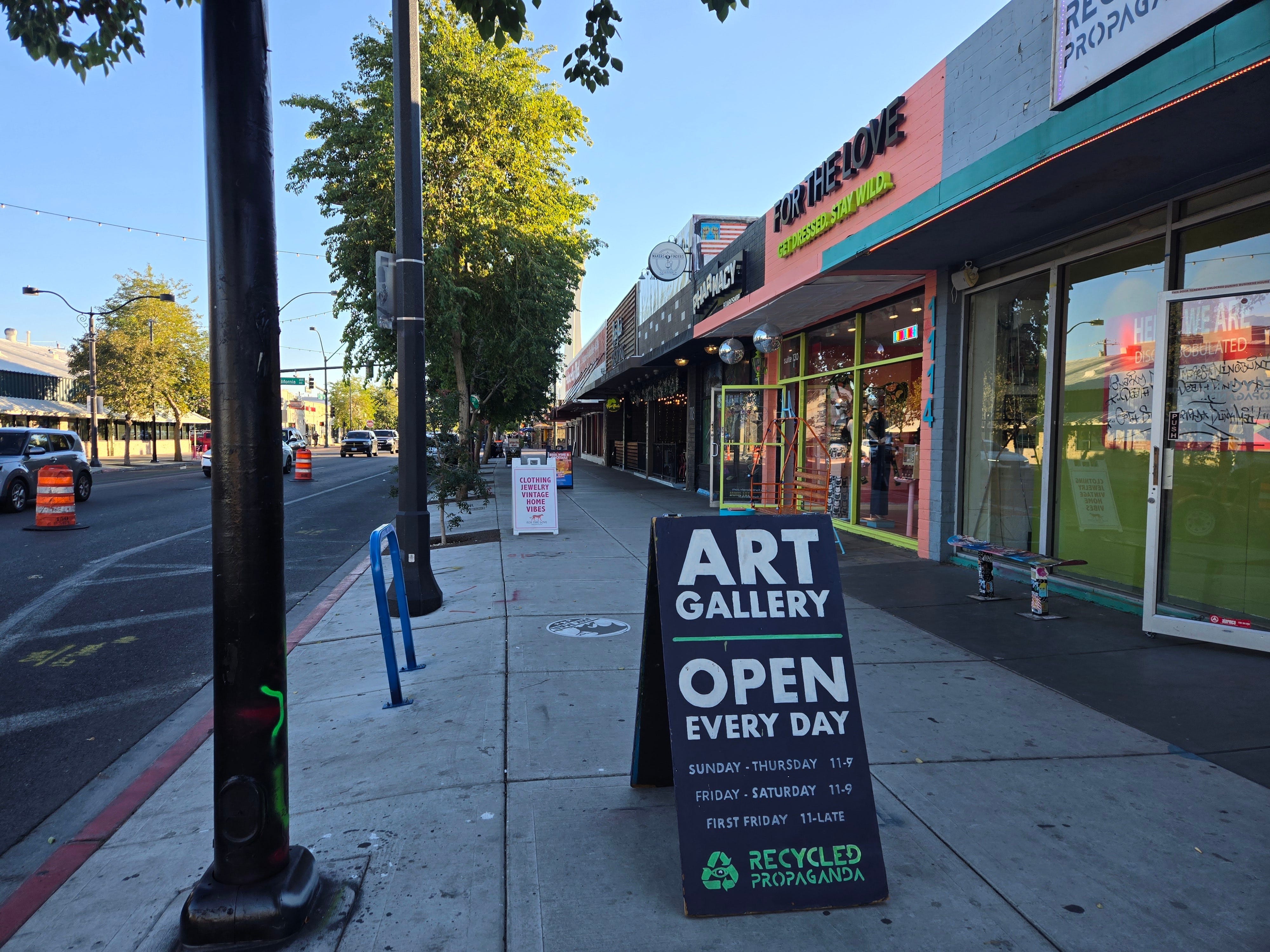
The rejuvenation of the area started later in the nineties when Wes Myles, a local photographer and businessman, opened The Arts Factory on Charleston Blvd. Its 30,000 square feet served studios, galleries, and other small businesses with low rent and a new network of artists. In 1998, they formed the non-profit 18b Las Vegas Arts District to support the original 18-block district, and soon the rest of the area started to fill with a few shops, galleries, and restaurants.
First Friday began in 2002 and steadily grew while a community of second-hand shops filled in the gaps in between, though foot traffic was somewhat limited. Things picked up with the arrival of trendy spots in the early 2010s like Velveteen Rabbit and ReBAR, and then Esther’s Kitchen in 2018. The James Trees restaurant kicked off what they’re now calling the “modern dining era” — which means you can get really good food in the Arts District.
Now, the Arts District is ready to start welcoming more residents, but it is no longer a quiet creative zone. It is now an urban neighborhood, and the density will increase quickly as new luxury apartments and condos arrive. The big bet is housing, and the most important people have made it. A shooting at First Friday is a high stakes situation when 100s of millions of dollars hang in the balance.
The big bet on housing
The housing efforts break down into three main categories, led by new construction of multi-family rental units. The bulk of the new housing supply focuses on these mid-rise buildings with a lot of modern amenities. Gemma, which sits on 3rd and California, has over 300 units across three buildings, with pool, spa, fitness center, rooftop deck, courtyards, dog parks, gated parking, and plenty of ground floor retail.
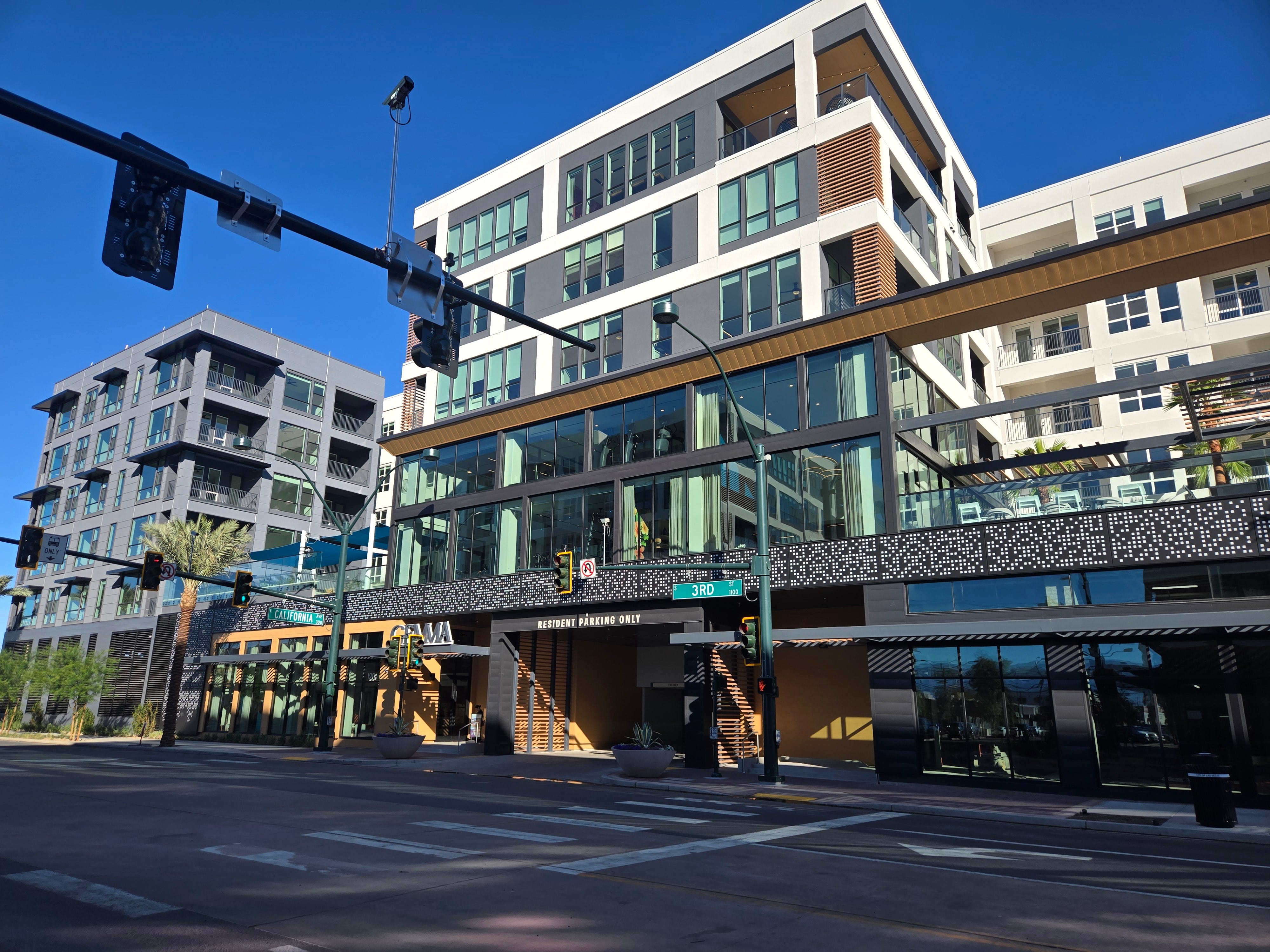
Gemma has transformed 3rd and California into midrise luxury living.
Another new building, The Myles, is at Commerce and Imperial, and it has a similar number of units and the same checklist of amenities. Gemma is owned by Nashville-based Southern Land Company, while The Myles is owned by Chicago-based Cedar Street Companies, and they are both starting to fill in with residents at market rates.
The second housing group is the new lineup of condos and semi-hotels, led by the English Hotel near First Street and Coolidge Avenue. Midtown Las Vegas wants to add two more towers with an ambitious vision that includes 3,000 units across a wide portfolio of Arts District condo buildings. These “eco-luxury” residences aim to be more of a hotel-condo, with a lean towards ownership and away from rentals.
Meanwhile, affordable housing initiatives round out the third group, as the first two plans will create a fair amount of displacement. The City of Las Vegas aims to turn public-owned land into a mixed-use project with more than 100 units of live/work housing and commercial space. It’s still in the early phases, but tools like tax credits are sliding into place. Other affordable units, like Revive Arts District, are not new, and they join other lofts and converted units that are sprinkled throughout the area.
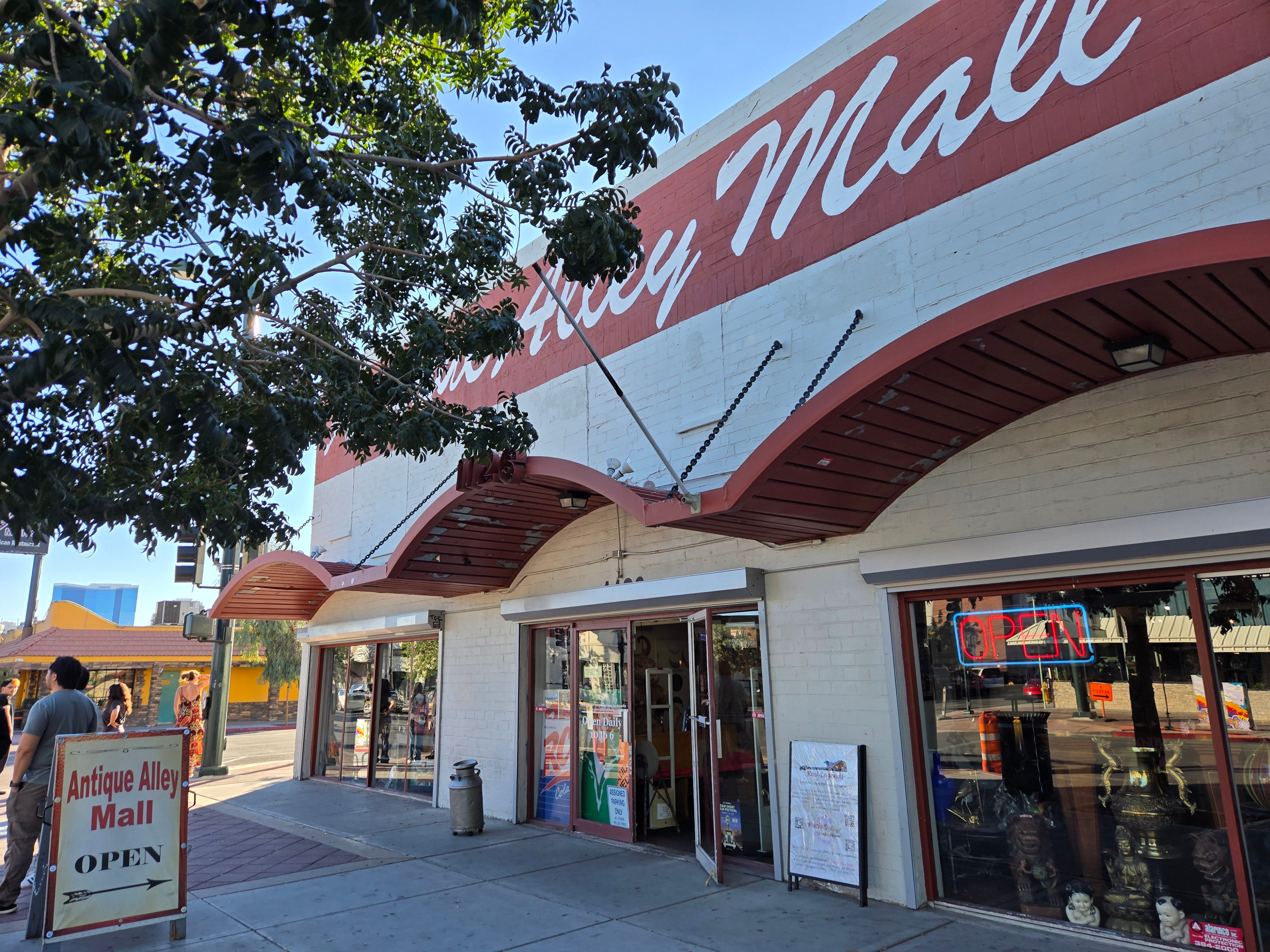
A new generation of businesses has filled in around longstanding tenants like Antique Alley.
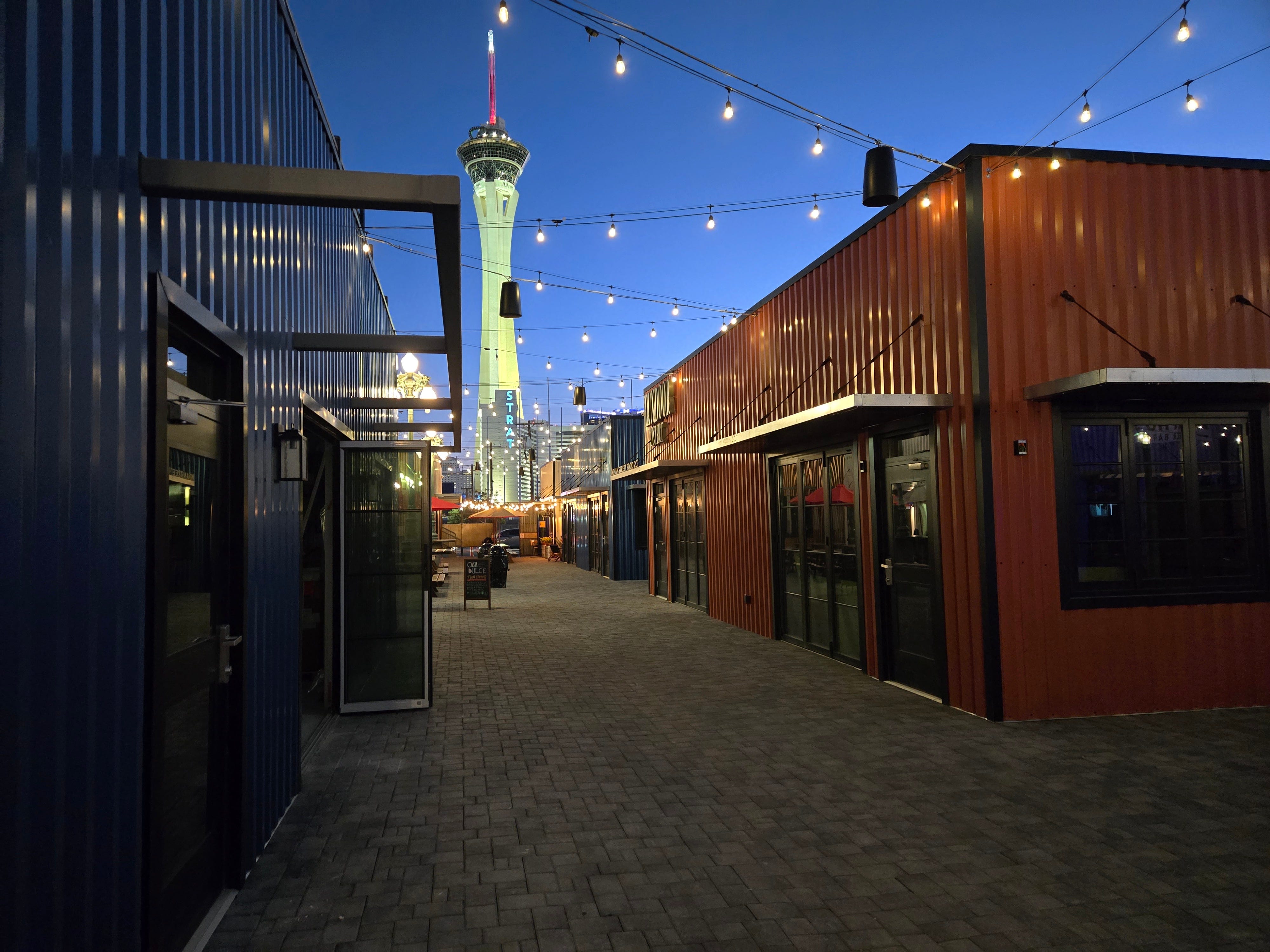
Other smaller groups like KLA Capital have been remodeling vacant properties throughout the district into both commercial and residential unit. KLA Capital is leading the development of Distrikt, a food and retail complex made of shipping containers with plenty of outdoor seating (seen in lead photo.)
High-stakes real estate
Overall, it’s a clear move to denser, more vertical housing after decades of the creative repurposing of a dead industrial corridor. The dramatic increase in newer, more modern amenities reflects the demand for urban living that can’t be found anywhere else in Las Vegas. That demand has now invited city support and out-of-town investment, but the natural forces of gentrification and property value threaten to push out the very people that create an environment of walkable urban living.
The First Friday shooting has rightfully sent a chill of reality up the spine of stakeholders, who rushed to put a pause to the festivities. Las Vegas Metro has said that they already increase patrols for the event, and its likely that their highly-trained police force is up to the task. We don’t shut down the Strip after shootings, nor do we put a halt to the gambling floor just because violence happened nearby, so why is First Friday different?
This likely has less to do with “marauding gangs” and more to do with the 600 luxury housing units that will open in the very near term. The stakes are too high for out-of-town investors to risk another incident while the area makes its big bet on luxury urban living.
Large crowds create incidents and stakeholders are playing the numbers game. First Friday will have to wait until they are comfortable with the risk of damage to the area’s perception.